The Productize
- The right online proofing tool depends on where approvals need to land after the client signs off.
- ManyRequests fits productized and subscription agencies because proofing, requests, and billing share one branded client portal.
- Filestage and Ziflow suit agencies with many external reviewers, while PageProof and Artwork Flow suit regulated or packaging work.
- Frame.io is the pick for video-first agencies, and BugHerd for client feedback on live websites.
- Check whether clients count as paid seats, since per-reviewer pricing adds up fast across 15 or more clients.
The best online proofing tool for your agency depends on where client approvals need to land. ManyRequests is the strongest fit for productized and subscription agencies that want proofing connected to their client portal, requests, and billing. Filestage and Ziflow suit teams that need dedicated, high-volume review workflows. Frame.io is built for video production.
If you run client work today, you know where feedback actually comes from:
- An email about a design the client wants changed
- A Slack message asking for a different direction
- A WhatsApp message about the version you thought they’d already approved
Meanwhile, your designer is on version four and the client is reviewing version two. Nobody can say for sure which feedback is final. With five to 20 clients, every unclear approval delays whatever your team works on next.
This guide compares 10 online proofing tools, from all-in-one agency platforms to dedicated creative proofing software, on review features, version control, client experience, and pricing. We checked every tool’s pricing page between October and November 2026.
Disclosure: ManyRequests publishes this guide and is one of the tools compared. We’ve noted where another tool is the better fit.
We also judged each tool on one question most roundups skip: what happens after the client clicks approve?
What to look for in online proofing software
Good online proofing software for a productized agency should be able to combine an easy client review experience, precise annotations, reliable version control, a clear approval record, and a workflow that connects sign-off to the next piece of work.
Here’s what to check before you commit.
Client experience
Good client proofing software lets clients review work without having to learn yet another complicated platform. Look for easy access, minimal login friction, and a review screen that looks like your agency, not the software vendor. For a productized agency, the review experience is part of what the client pays for.
File type coverage
Pick a tool that supports what you actually deliver, whether images, PDFs, video, or live websites. An agency producing social graphics and PDFs doesn’t need frame-accurate video comments, but an agency shipping promo videos or websites does.
Annotation precision
In any design approval tool, good annotations are what make feedback actionable. Pinned comments show exactly which element needs work, drawing tools show visual changes, and text highlights point to the copy that needs editing.
Version history and comparison
Your team and your client should always know which file is current so you don’t end up working on different versions. Side-by-side and overlay comparisons show what changed, and clear version labels stop reviewers from commenting on an outdated file.
Approval status visible to both sides
Look for an explicit “Approved” or “Changes requested” status, recorded with the reviewer’s name and a timestamp. Both sides should be able to find the approved version without having to dig through messages or multiple threads.
Where feedback goes after approval
This is the criterion that decides how much admin your team carries. Approval should move work forward: it should update the request status, record the revision used, and notify whoever acts next.
Take a design subscription client on a plan with two revisions per request:
- The client submits a social media graphic.
- They review the first draft and request changes.
- Your designer uploads version two, and the client approves it.
If proofing and request management live in the same system, that approval closes the request, logs the revision, and then frees the designer for the next item in the queue. Across multiple review rounds, both sides can also see how many revisions are left on the plan.
But if approval happens in a separate proofing tool or via an email thread, someone still has to copy the decision into your request tracker or project management tool, update the request, and ping the designer. When you’re working with 15 clients and dozens of assets a week, that copying becomes a part-time job on its own.
So before choosing a design approval tool, check whether approval connects to your workflow or leaves your team to bridge the gap.
Pricing model
Compare what the tool will actually cost you. Some platforms charge per seat while others charge a flat or tiered rate. Check whether clients, guests, and external reviewers count as paid seats.
If you serve 15 clients, a tool that charges for every reviewer can cost far more than one where clients review for free.
The bottom line: choose a proofing tool that fits both your creative workflow and your business model. The right one makes the next step obvious once the client says yes.
Online proofing tools comparison table
Here’s how the 10 tools compare at a glance.
| Tool | Best for | File types (image / PDF / video / web) | Annotation | Version comparison | Client access without login | Approval workflow | Approval updates the request natively | Starting price |
|---|---|---|---|---|---|---|---|---|
| ManyRequests | Productized and subscription agencies | ✓ / ✓ / ✓ / ✗ | ✓ | Partial | ✗ | ✓ | ✓ | $27/mo billed annually (Core, 2 seats) |
| Wrike | Proofing inside project management | ✓ / ✓ / ✓ / ✓ | ✓ | ✓ | ✓ | ✓ | Partial | $25/user/mo (Business plan) |
| Filestage | Agencies with many reviewers | ✓ / ✓ / ✓ / ✓ | ✓ | ✓ | ✓ | ✓ | ✗ | Free plan; $199/mo billed annually (10 seats) |
| Ziflow | High-volume, structured approvals | ✓ / ✓ / ✓ / ✓ | ✓ | ✓ | ✓ | ✓ | ✗ | Free plan; $199/mo billed annually (15 users) |
| PageProof | Regulated and brand-sensitive work | ✓ / ✓ / ✓ / ✓ | ✓ | ✓ | ✓ | ✓ | ✗ | $249/mo |
| GoVisually | Small design teams | ✓ / ✓ / ✓ / ✗ | ✓ | ✓ | ✓ | ✓ | ✗ | $20/user/mo |
| ReviewStudio | Small agencies reviewing mixed formats | ✓ / ✓ / ✓ / ✓ | ✓ | ✓ | ✓ | ✓ | ✗ | Free plan; $12/user/mo billed annually |
| Frame.io | Video production agencies | ✓ / ✓ / ✓ / Partial | ✓ | ✓ | ✓ | ✓ | ✗ | Free plan; $15/member/mo |
| BugHerd | Website proofing | ✓ / Partial / ✗ / ✓ | ✓ | Partial | ✓ | ✓ | Partial | $42/mo billed annually |
| Artwork Flow | Print, packaging, and artwork compliance | ✓ / ✓ / Partial / Partial | ✓ | ✓ | ✓ | ✓ | ✗ | From $8,000/yr (quote) |
Prices checked October to November 2026. "Approval updates the request natively" means sign-off changes the request or task status, revision count, and next step without a separate tool. Several dedicated proofing tools can push status to a project management tool through integrations.
The 10 best online proofing tools for agencies
The tools are grouped by the kind of work they handle best. For each one, we note where client approval ends up, because that decides how much manual work your team does after sign-off.
All-in-one agency platform
1. ManyRequests: best for productized and subscription agencies
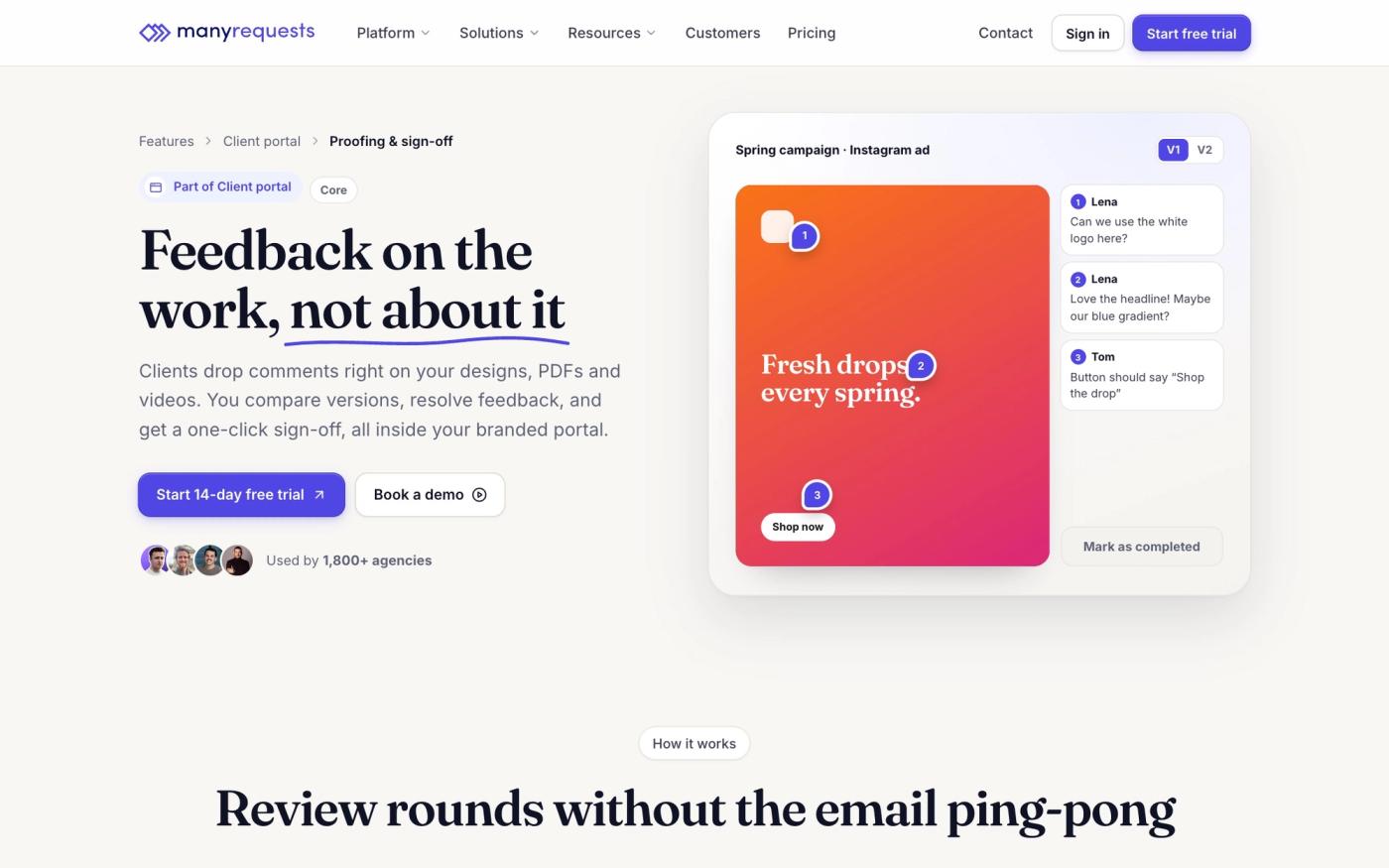
ManyRequests makes the most sense when proofing is part of a repeatable service. Clients submit requests, review creative work, leave comments, and approve deliverables in the same branded portal they use to manage billing and their relationship with your agency.
What it does well
- Proofing that feels like part of the service. Clients don’t bounce between a project tracker, a proofing app, and an invoice portal. Design feedback and approvals in ManyRequests happen in one branded experience.
- Approval connects to the request. Approval is recorded against the client’s request, so your team sees what’s ready to ship, what needs another revision, and what’s still in the queue, without copying anything between tools.
- Design and video proofing on every plan. Clients annotate images, PDFs, and video directly. The portal can also embed other tools through extensions.
ManyRequests is rated 5.0 out of 5 on Capterra, based on 7 reviews. One creative project manager who has used it for 3 to 5 years says it “understands agency workflows without feeling bloated or overly complicated.”
Where it falls short for agencies
ManyRequests doesn’t proof live websites, and it has no native Adobe Creative Cloud plugin. Web agencies can pair it with a website feedback tool like BugHerd. Clients review inside the portal rather than through a guest-only link. That is a tradeoff: you give up anonymous access, and in return you get a full history of every request and sign-off.
Pricing: Core is $39/month and Pro is $99/month on monthly billing, or $27/month and $69/month billed annually. Core includes 2 team seats, Pro includes 5, and Scale includes unlimited seats. Every plan includes unlimited clients and design and video proofing, and there is a 14-day free trial with no card required. See ManyRequests pricing.
Running a design or video subscription? Keep client requests, proofing, and approvals in one branded portal instead of four tools. Start a free trial.
2. Wrike: best for proofing inside an existing project management tool
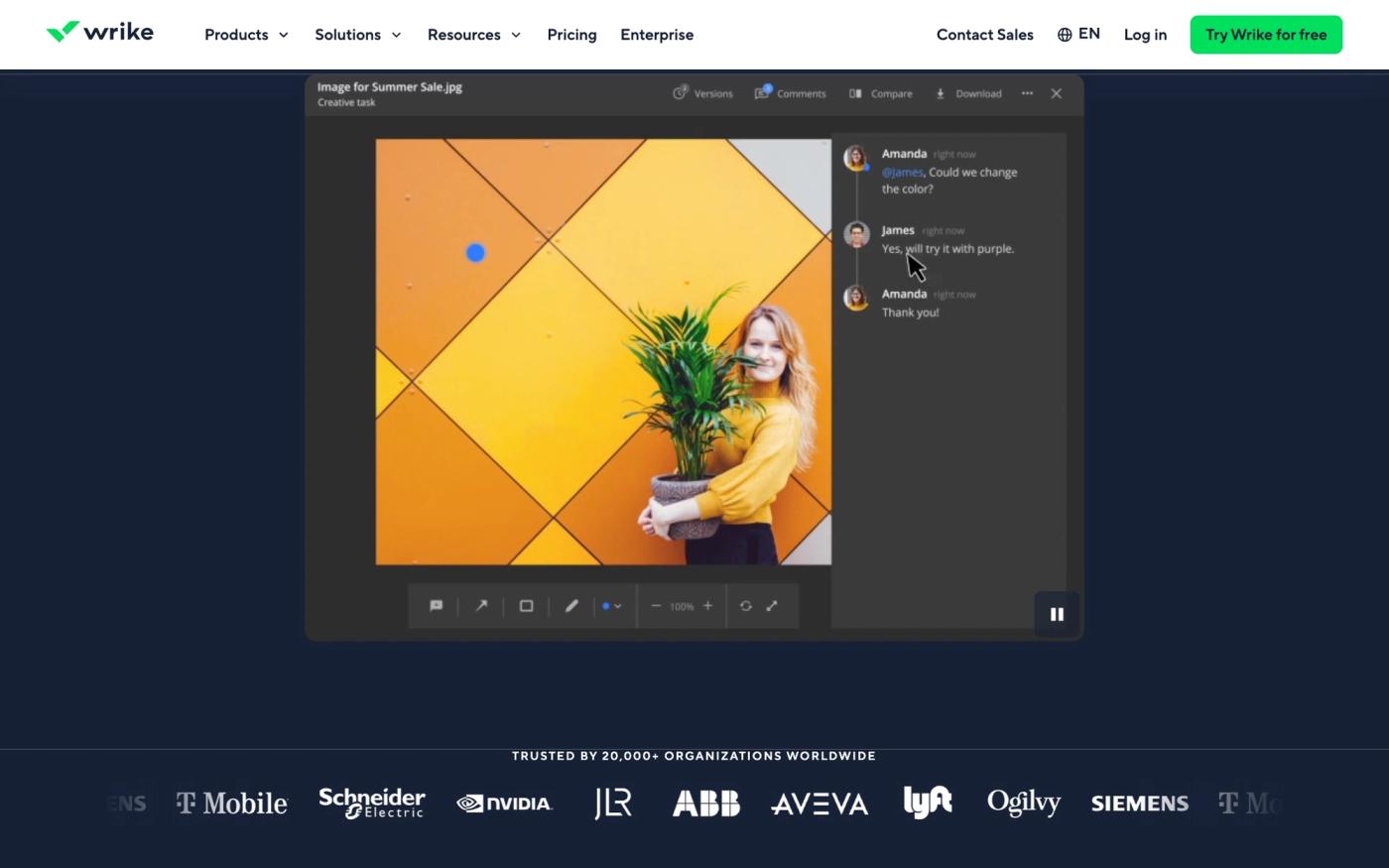
Wrike fits agencies that already run delivery, deadlines, and assignments within Wrike and want to receive feedback in the same system.
What it does well
- Proofing covers video, images, documents, and live web pages, so most asset types stay in one workspace.
- Approvers are notified automatically when an asset is ready, which shortens the wait between upload and review.
Where it falls short for agencies
Wrike is a strong tool built for a different business model. It’s designed for internal teams managing projects, not for clients buying a subscription. Approvals land in your internal task, and clients join as guests or collaborators rather than through a branded service portal. Proofing features also vary by plan.
Pricing: Proofing starts on the Business plan at $25 per user/month. Check Wrike’s pricing page to confirm which plan includes the guest access and approval workflows you need.
Dedicated proofing
3. Filestage: best dedicated creative proofing software for agencies with many reviewers
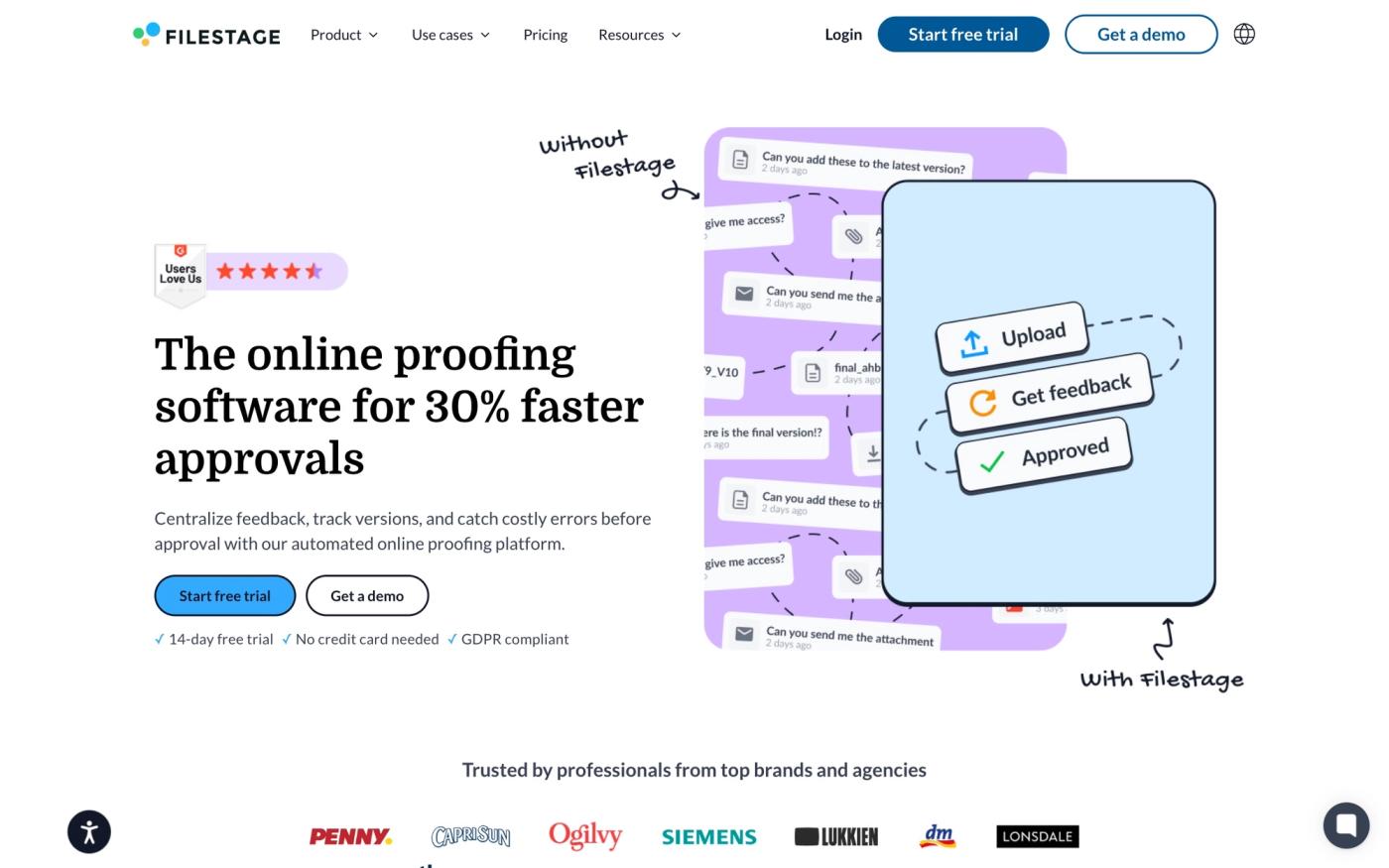
Filestage suits agencies coordinating feedback from several clients, departments, and outside stakeholders on the same files. The platform centralizes conversations and feedback so it’s easier for the agencies to understand the context.
What it does well
- Supports video, images, documents, websites, interactive HTML, and audio.
- Reviewers comment and approve without creating an account, which helps with occasional or senior client reviewers who won’t sign up for another tool.
Where it falls short for agencies
Approval ends inside Filestage, so updating the request, the revision count, or the invoice is still a manual step in your other tools.
Pricing: A free plan is available. Billed annually, Starter is $199/month and Business is $329/month, and each includes 10 team seats. See Filestage pricing.
4. Ziflow: best for high-volume or compliance-heavy proofing
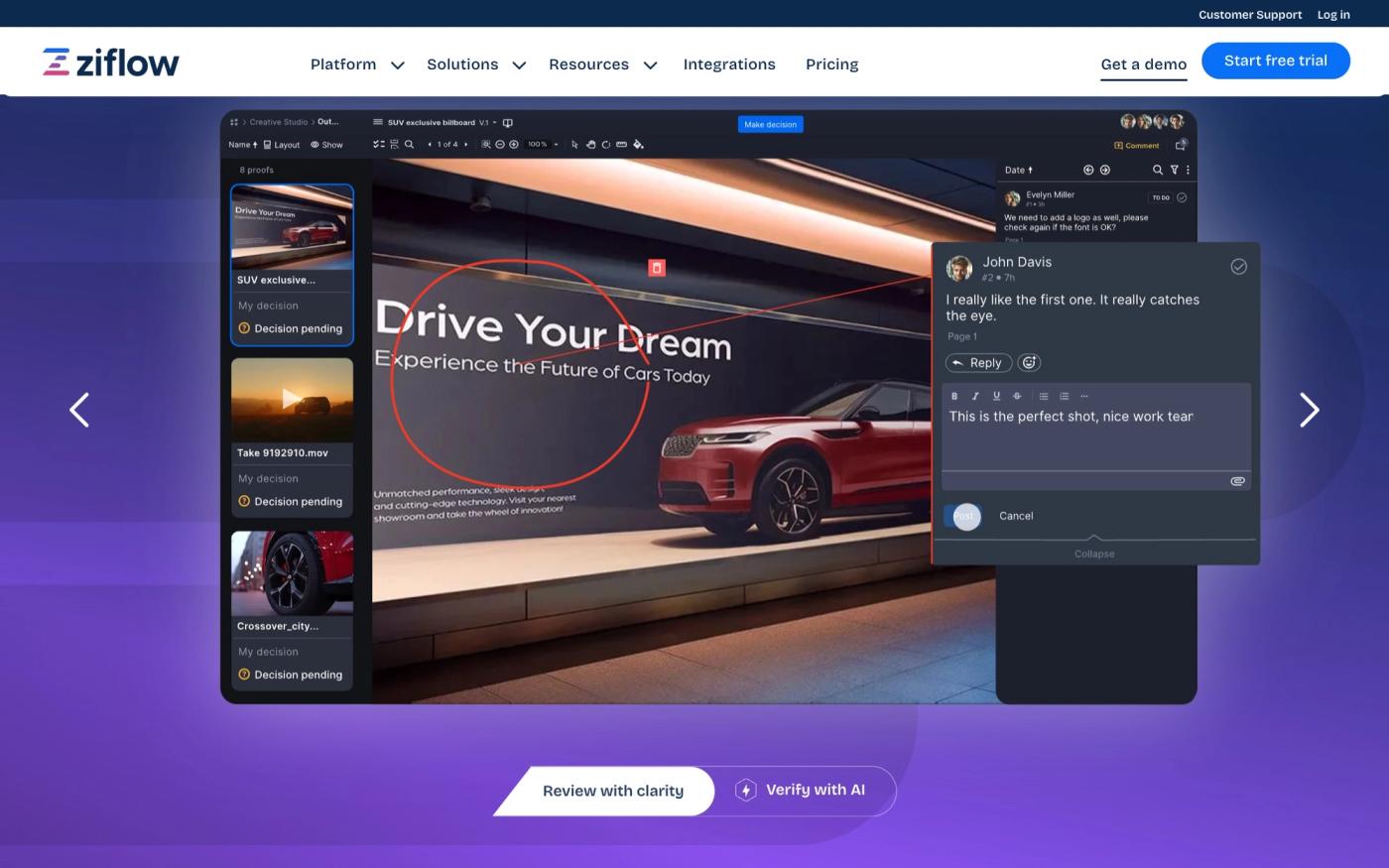
Ziflow is built for creative operations teams handling large proof volumes, staged approvals, and documented review histories. Its dashboard helps reviewers see every asset and which ones still need feedback or approval.
What it does well
- Pixel-level version comparison shows exactly what changed, so reviewers don’t rely on memory or flip between exports.
- Sequential and parallel workflows set who reviews an asset and in what order.
- Higher plans add more workflow stages, templates, integrations, and deeper audit history.
Where it falls short for agencies
The workflow depth is more than most small studios need, and setting it up takes time. Budget for the extra proof-manager seats and storage that a growing team will need.
Pricing: A free plan is available for 2 users. Standard is $199/month (15 users) and Pro is $329/month (20 users) when billed annually, and enterprise pricing is quote-based. See Ziflow pricing.
5. PageProof: best for regulated clients
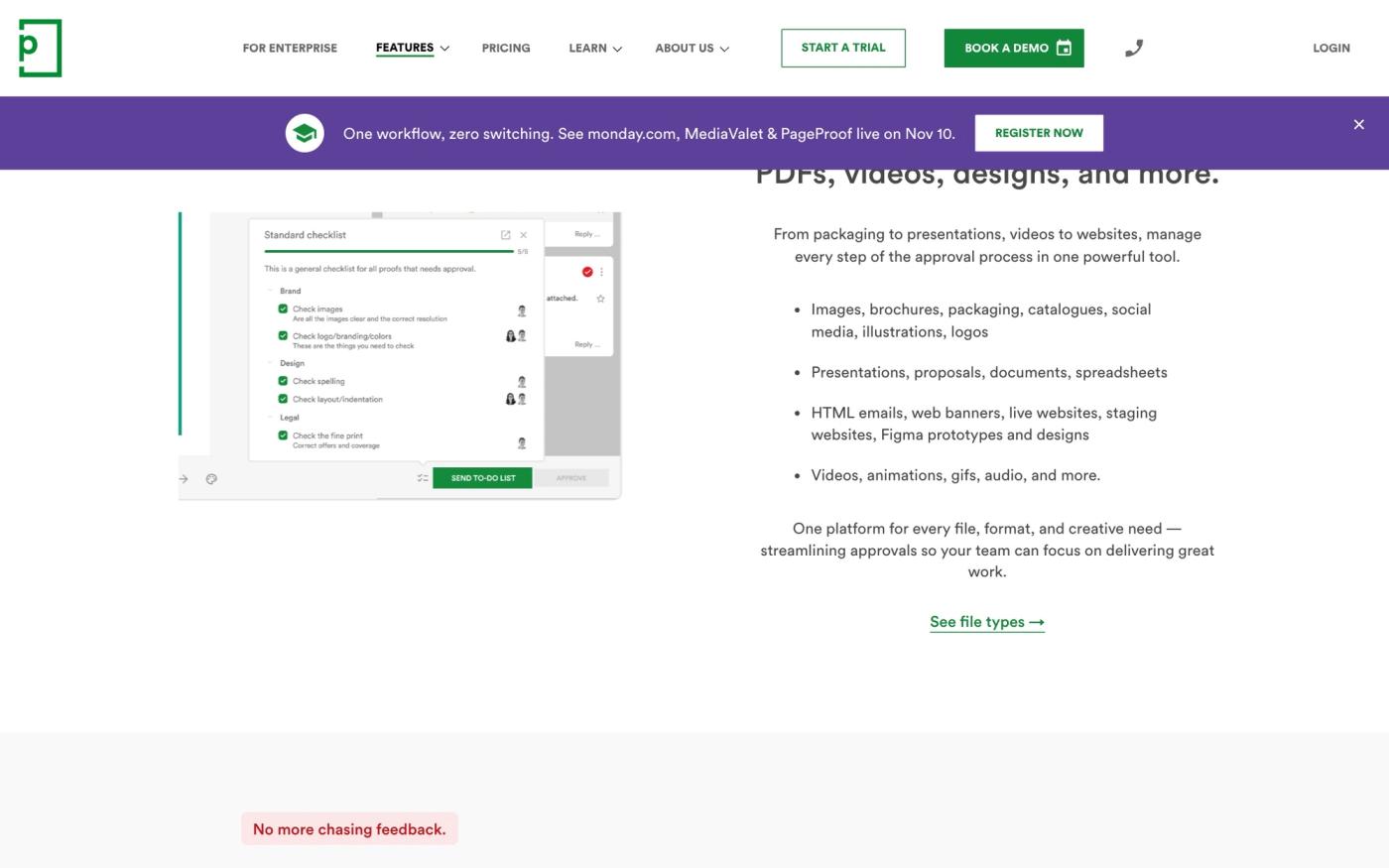
PageProof fits agencies producing regulated, brand-sensitive, or print-bound content where documented approvals and precise comparisons matter.
What it does well
- Smart Compare highlights differences between versions, including less obvious changes like fonts, color profiles, metadata, and resolution.
- Approval workflows, reviewer permissions, audit trails, and security options document every step, which matters when a financial or pharma client asks for proof of sign-off.
Where it falls short for agencies
It’s a high fixed cost for a small agency, and the compliance depth is wasted on social graphics and ad creative. Approval also stays inside PageProof rather than updating your request queue.
Pricing: Team is $249/month and Team Plus is $499/month. Enterprise pricing is quote-based. See PageProof pricing.
6. GoVisually: best lightweight option for small design teams
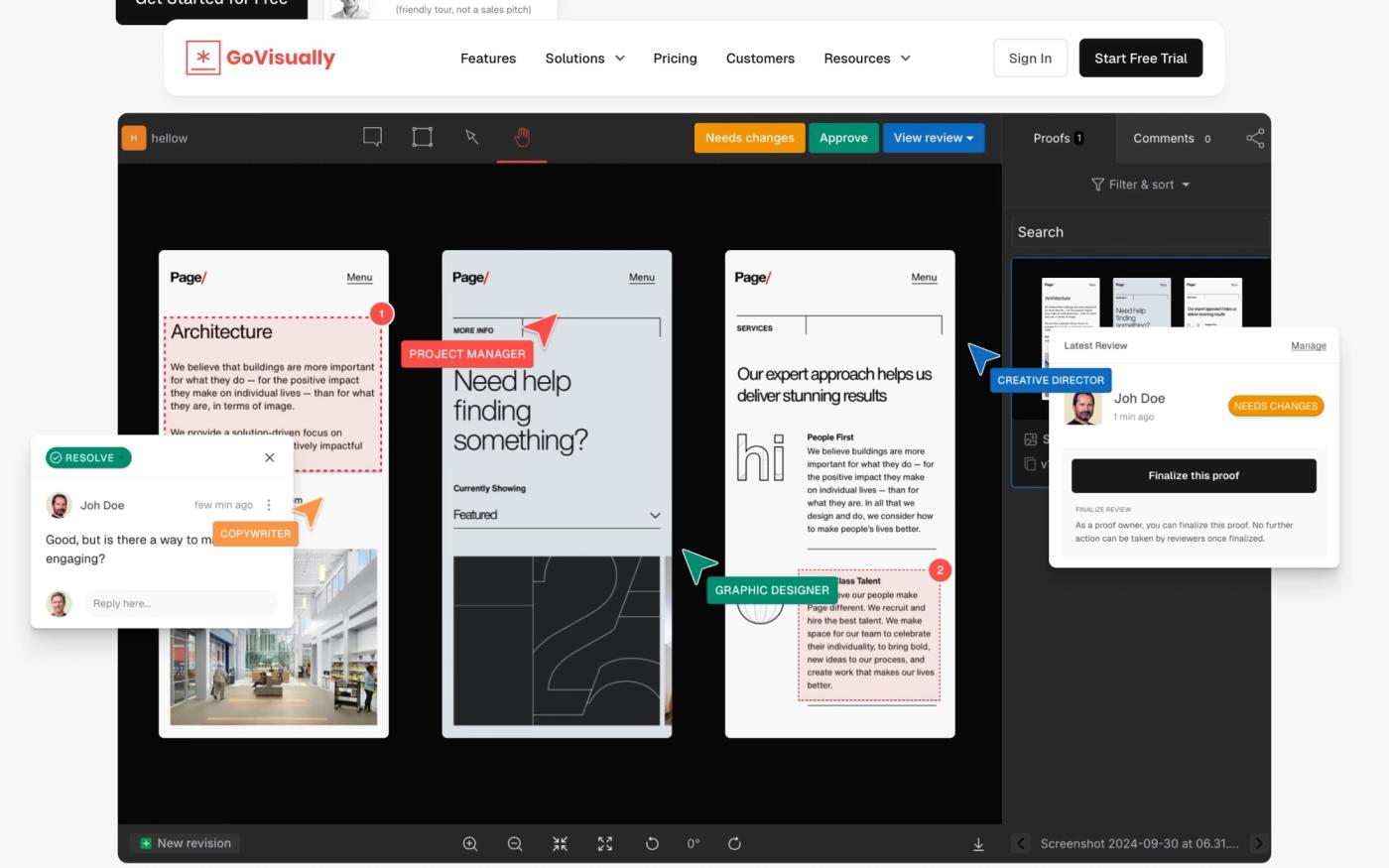
GoVisually suits small design agencies that want clients to mark up work without learning a complicated review system.
What it does well
- Clients can open a proof and start commenting with almost no onboarding, which matters when your clients are busy founders.
- Feedback stays attached to the right asset and revision instead of getting lost in a general task list.
Where it falls short for agencies
It’s built for review, not delivery. Once your client list grows, check whether its workflow controls, integrations, and reporting keep up, because approvals still need to be moved into whatever runs your requests.
Pricing: Lite is $20/user/month and Pro is $40/user/month on monthly billing. See GoVisually pricing.
7. ReviewStudio: best for small agencies needing simple, multi-format review
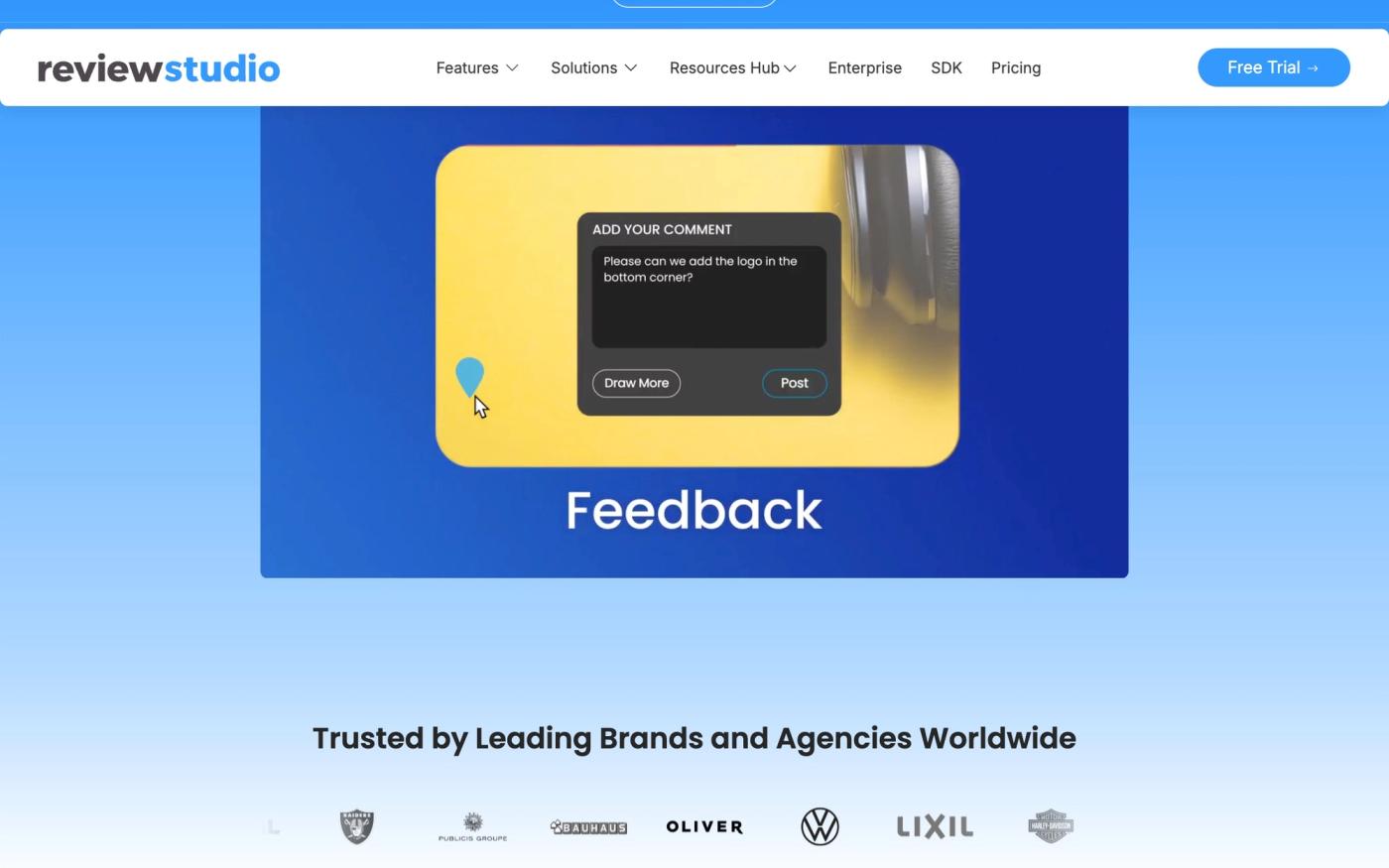
ReviewStudio suits small agencies that want straightforward review and approval across several creative formats.
What it does well
- Reviewers pin comments to an exact spot, draw with shapes or freehand, and mark up text with highlight, delete, insert, or replace, so every note lands in context.
- It generates a print-ready PDF archive of all feedback and approvals on a file, which is useful when a client disputes what they signed off on.
Where it falls short for agencies
If you run delivery in Asana, Monday.com, or ClickUp, test the integrations during the trial. Without a solid connection, every approval becomes a manual update in your PM tool.
Pricing: A free plan is available. Pro is $12 per user/month and Advanced is $20 per user/month, billed annually. See ReviewStudio pricing.
Video and web review
8. Frame.io: best for video production agencies
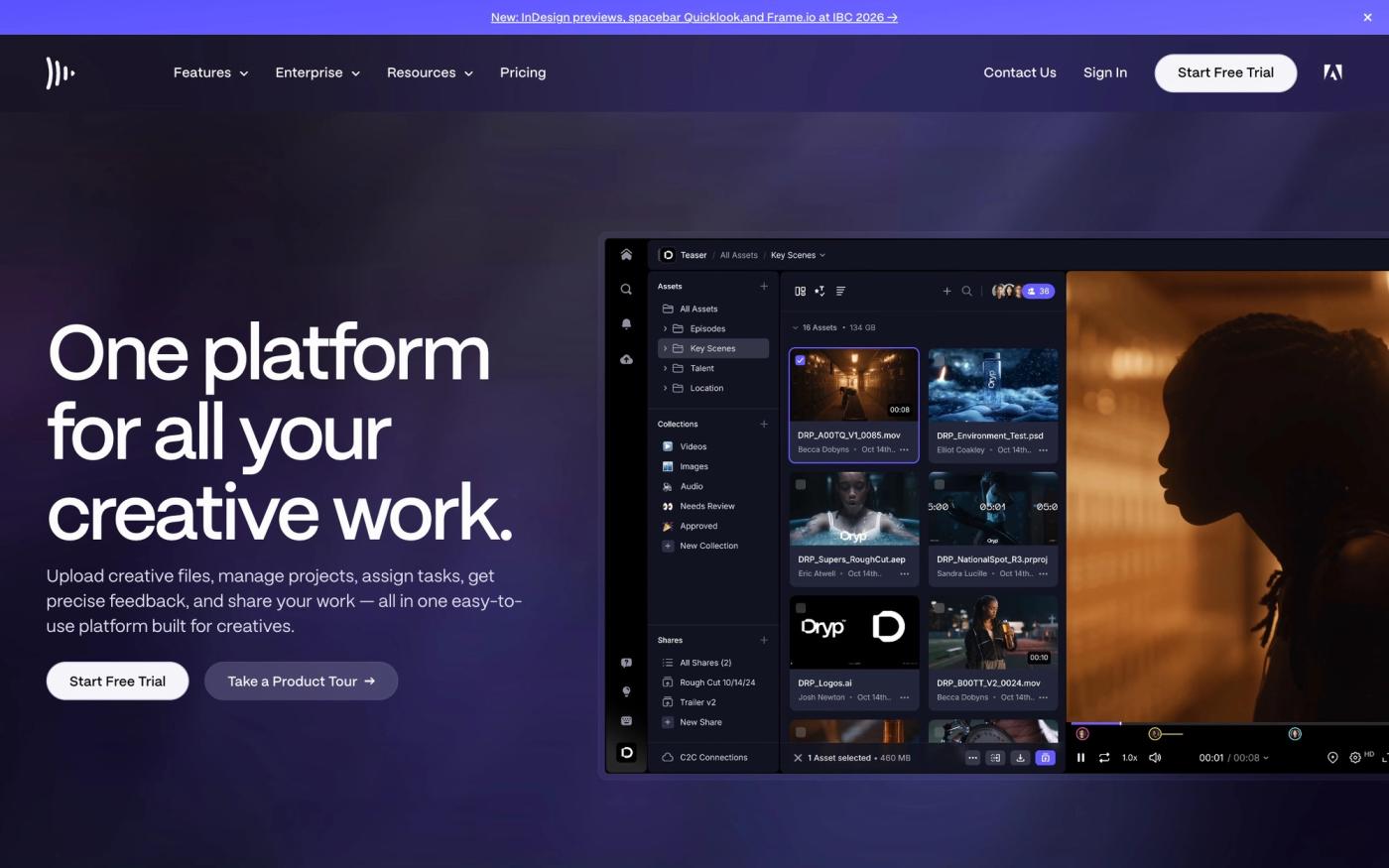
Frame.io suits video production, post-production, and content agencies that need granular feedback tied to exact moments in a cut.
What it does well
- Frame-accurate and range-based comments mean “fix the logo at 0:42” lands on the exact frame.
- Editors work through feedback right next to the footage, with version management built in.
Where it falls short for agencies
Frame.io is built for media collaboration, not agency operations. Approval doesn’t touch your request queue, client billing, or revision allowance, so a video subscription agency still needs a separate system to run the business side.
Pricing: A free plan is available. Pro is $15 per member/month and Team is $25 per member/month, with a discount for annual billing. Enterprise pricing is custom. See Frame.io pricing.
9. BugHerd: best for website proofing
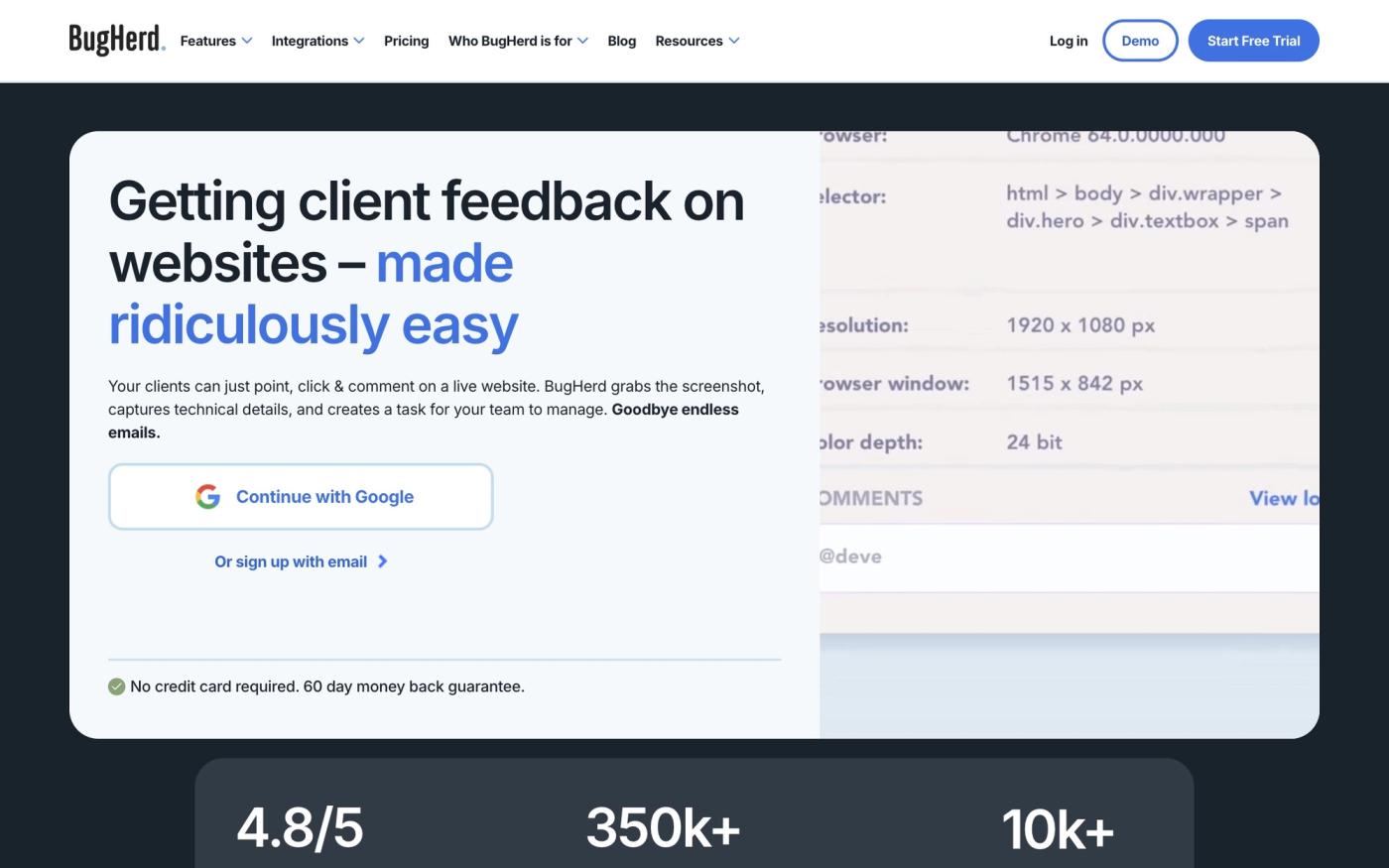
BugHerd suits web design and development agencies collecting client feedback on live sites and staging environments.
What it does well
- Reviewers click anywhere on a live page to leave a comment.
- Each comment captures a screenshot and technical details (browser, screen size, URL) and lands on a task board your developers can work from.
Where it falls short for agencies
BugHerd only covers websites. So if you also review packaging artwork, long documents, or video, you’ll need a second tool.
Pricing: Standard is $42/month, Studio is $67/month, and Premium is $125/month on yearly billing. See BugHerd pricing.
Artwork and packaging
10. Artwork Flow: best for print, packaging, and artwork compliance
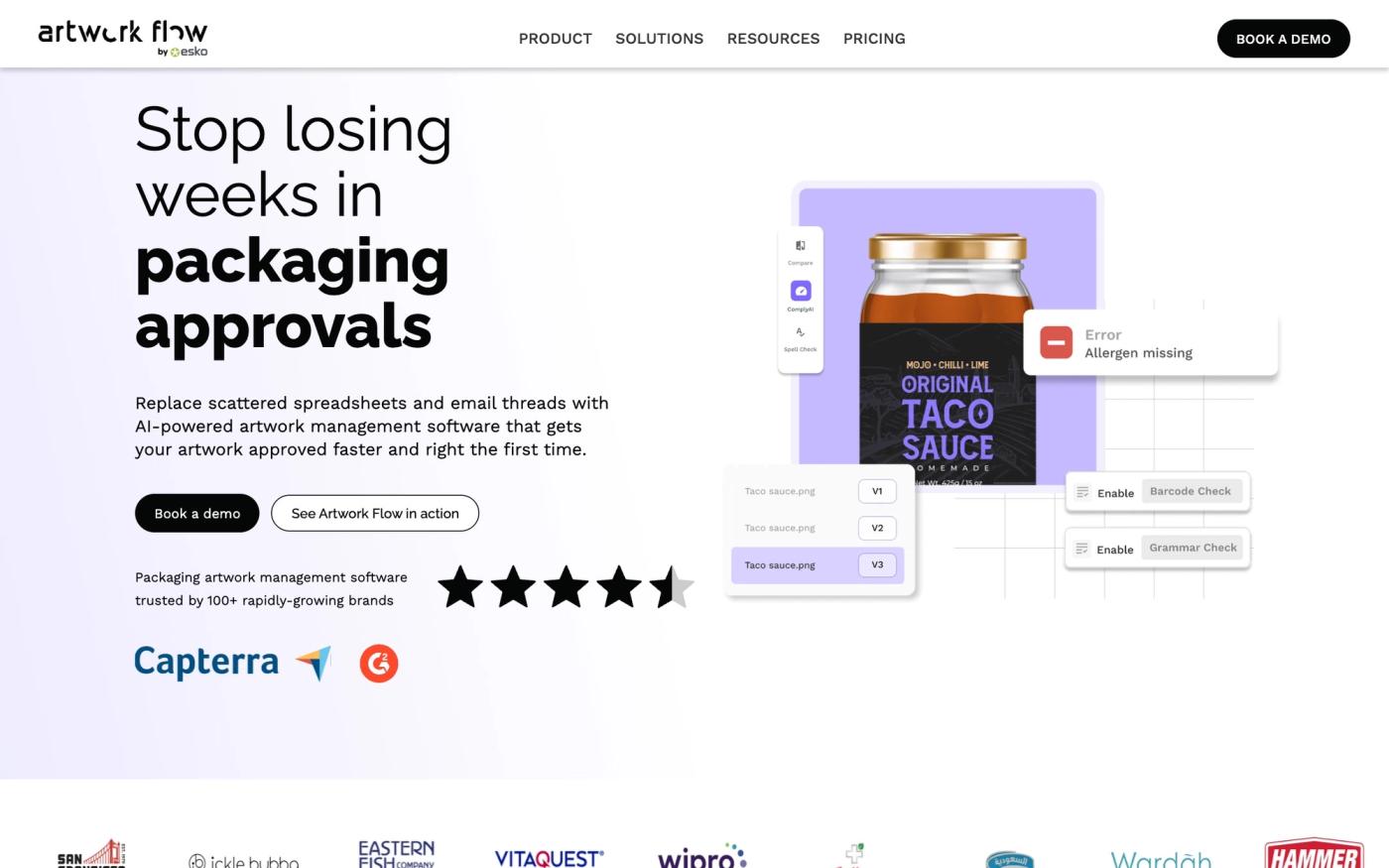
Artwork Flow suits agencies managing packaging, print production, and artwork where specs and approvals need close control.
What it does well
- Built for artwork rather than general creative review, so its checks focus on what breaks in print: copy accuracy, required text, and brand consistency across SKUs.
- Structured review stages track which assets have cleared each approver, which matters when legal, brand, and the printer all need to sign off.
Where it falls short for agencies
It’s priced and built for brands with steady packaging volume, not small agencies doing occasional print jobs. Test onboarding time and how it handles your real artwork volume during a live trial before committing.
Pricing: Pricing is quote-based through sales and starts at $8,000/year based on artwork volume. See Artwork Flow pricing.
Artwork proofing and graphic design proofing software
Artwork proofing and graphic design proofing solve different problems, so the right tool for each is different.
What is artwork proofing?
Artwork proofing is reviewing print and packaging files for color accuracy, bleed, dielines, copy, and regulatory text before they go to production. Artwork Flow, Filestage, and PageProof all support this, though their prepress and compliance features vary.
A packaging review, for example, checks that the ingredient list is correct, the required legal text is present, and the file matches the printer’s specs. The stakes are higher than in digital work because a pixel fix costs minutes and a reprint costs thousands.
Best graphic design proofing software for design agencies
The best graphic design proofing software depends on how your agency delivers work. For project-based teams, a dedicated proofing tool works well because each campaign gets its own review process.
Design subscription agencies are different. They ship dozens of small assets a week, and each one already belongs to a client request. Opening a separate proofing project for every graphic is overhead you don’t need.
That’s why ManyRequests fits productized and subscription agencies best: proofing happens on the request itself. GoVisually is a good alternative if you want a lightweight review tool and handle requests elsewhere.
Which online proofing tool fits your agency?
The right tool depends on your delivery model, your review volume, and what needs to happen after a client approves. Use this table to narrow the list.
| If you... | Choose |
|---|---|
| Run a design or video subscription and want approvals tied to requests and billing | ManyRequests |
| Collect client feedback on live websites | BugHerd (alongside ManyRequests if you run a web subscription) |
| Need external reviewers to give feedback without accounts, plus detailed version comparison | Filestage or Ziflow |
| Handle regulated creative work or packaging production | PageProof or Artwork Flow |
| Mostly deliver video and need frame-accurate feedback | Frame.io |
| Already manage projects in Wrike and want proofing in the same workspace | Wrike’s built-in proofing |
Before adding a tool, map your approval process from the first draft to the next action. Our guide to design collaboration tools shows how to cover the full workflow with what you already use.
If you already pay for three or four tools, adding a fifth for design annotation tools usually makes the approval problem worse, not better. Pick the tool that fits how you deliver, not the one with the longest feature list.
Get client approvals out of your inbox
An online proofing tool gives clients one clear place to review work, tells designers exactly what to change, and makes the approved version easy to find. The bigger win is connecting that approval to what happens next: closing the request, logging the revision, and moving to the next piece of work.
If you run a design subscription or productized agency, ManyRequests puts proofing inside your client portal and request workflow, so approvals don’t live in yet another disconnected tool. Start a free trial.
Before the next request comes in, send clients a graphic design questionnaire to capture what you need upfront. Better briefs mean fewer revision rounds and faster approvals.
FAQ
What is online proofing?
Online proofing is reviewing, annotating, and approving creative files in a browser, with all feedback and versions in one place. Instead of collecting comments across email and chat, clients review in a shared workflow. Depending on the tool, they can mark up images, PDFs, videos, or web pages and mark a file approved or needing changes.
Which online proofing tool is best for agencies?
It depends on your delivery model. Productized and subscription agencies get the most from ManyRequests, because proofing, requests, and billing share one client portal. Agencies with many external reviewers often prefer Filestage or Ziflow. Video-first agencies should look at Frame.io, and web agencies at BugHerd.
What proofing tools support multi-round client reviews?
Most dedicated proofing tools, including Filestage, Ziflow, PageProof, and ReviewStudio, keep each round as a new version so reviewers can compare changes. ManyRequests also ties each round to the client’s request, so your team and the client can see how many revisions have been used against their plan.
What is the best proofing software for designers?
It depends on how your agency delivers work. ManyRequests suits subscription design agencies that want proofing tied to client requests and billing. GoVisually suits small teams that want simple creative review. Filestage is strong when many reviewers weigh in on the same files.
Can clients approve files without creating an account?
Yes, some client proofing tools allow it. Filestage lets reviewers comment and approve without an account. ManyRequests keeps reviews inside your branded client portal. The tradeoff is simple: a guest link removes login friction, while a portal keeps every approval tied to the request, project history, and billing.
How is proofing different from project management?
Proofing captures feedback and approval on a specific creative asset. Project management tracks the work, deadlines, and owners around it. A designer might use design approval software to collect comments on a landing page mockup and a PM tool to track the task through delivery. Platforms that combine both remove the step of copying approvals between tools.
Is there free proofing software?
Yes. Filestage, Ziflow, ReviewStudio, and Frame.io all offer free plans that come with proofing features. Their limits on projects, files, users, and storage usually make them practical for occasional reviews only. If you handle multiple clients with frequent revision rounds, compare paid plans against your real monthly volume.
Which online proofing tools integrate with Adobe Creative Cloud?
Several do, with different app coverage. Ziflow and PageProof have plugins for Photoshop, Illustrator, InDesign, Premiere Pro, and After Effects. GoVisually covers Photoshop, Illustrator, and InDesign. Filestage connects with InDesign, Premiere Pro, and After Effects, Frame.io with Premiere Pro and After Effects, and ReviewStudio with Photoshop. ManyRequests doesn’t have a native Adobe plugin, so designers upload files to the client’s request instead.