Productized Consulting: How to Package & Scale Services in 2026
Learn how to package your expertise into productized consulting services for predictable income and streamlined agency growth.

Regina Ongkiko

Productized consulting is how you stop selling time and start scaling your consulting without hiring endlessly. It's a model where you package proven expertise into fixed-scope, repeatable services with clear pricing and structured delivery. Instead of billing by the hour or scoping every project from scratch, you sell defined outcomes on a subscription or retainer basis.
For subscription agencies, a productized consulting model makes recurring delivery actually work. Instead of re-scoping work every month, you deliver the same structured outcome on a predictable cadence. This keeps margins healthy and client retention solid.
In a nutshell, the productized consulting system flows like this:
If any one of these is missing, the model breaks. This guide covers how to package, price, and operationalize a productized consulting business in 2026, including the transition roadmap, tech stack, and common mistakes to avoid.
Productized consulting is packaging your proven expertise into clearly defined, repeatable services with fixed scope and pricing. Instead of selling hours or days, you sell outcomes in the form of subscriptions or retainers.
Why is this model growing in 2026? The clear reason is that the economics of consulting have changed.
So, this productized service model wins when you stop selling “time” and start selling a scalable, repeatable system. For that, productizing works for consultants, agency founders handling a high volume of client requests, and operators moving toward recurring delivery.
The key mindset shift of the productized service model is to stop pricing time and effort and start pricing results and outcomes.
Your services are ready to productize if you can define a repeatable outcome that clients consistently pay for and value. That’s the core test. Here’s how you see that clearly:
This is all about how to productize consulting services. You package your services by defining exactly what the client gets, how it’s delivered, and where the boundaries are. The desired result is that each engagement produces the same outcome without constant reinvention.
Start by identifying the core of your service. Strip everything that changes from client to client or depends on one-off decisions. That repeatable core is the foundation of your package.
Next, get crystal clear on the scope. Be explicit about what your client is getting and what’s not. You avoid scope creep if every expectation and deliverable is defined upfront. So, the more you define boundaries, the fewer surprises there will be for you or the client.
Don’t promise a result to a client until you’ve already figured out exactly how you’ll deliver it every single time. The delivery process is the backbone that makes productized consulting scalable, predictable, and stress-free. Map the workflow, assign responsibilities, and make sure it can be executed reliably, whether by you or someone else. Consistency in client management and output delivery is everything.
Finally, you want anyone (including future hires or your team) to be able to follow the same way every time. That’s the real move from consulting to a productized agency. Templates, checklists, and clear instructions transform your workflow into a system that guarantees results.
Use this as your starting point before writing a sales page or pitching a client:
Here’s a sample filled-out offer:
Quick note: If you can't fill this in cleanly, the service isn't ready to sell yet.
Again, you price productized consulting services based on the value you deliver. And value-based pricing anchors the cost to the outcome, the benefit, or the risk reduction you provide.
In productized consulting, tiered pricing is the most practical way to price from day one. It’s about giving them a structured comparison that makes the choice obvious. Why?
The names and differentiation aren’t just marketing. They guide decision-making. “Starter,” “Professional,” and “Premium” signal clearly what the client gets at each level and why one is worth more than the next. When your tiers are defined by value delivered, clients see the investment as rational and easy to approve.
But don’t just slap numbers on a page either. Every tier covers your real costs, includes a healthy margin, and actually reflects the value clients get. Profitability is part of the system. A tier that isn’t profitable breaks the whole repeatable, scalable model you’re building.
Productized consulting makes sense whenever a service has a repeatable core that produces predictable outcomes, no matter the industry.
Across all these verticals, one thing is constant: If the core outcome is repeatable, workflow is defined, and there’s no ambiguity, you don’t just sell consulting. You sell a productized system that clients understand, value, and pay for consistently.
Most consultants running productized services end up with the same problem: five tools that don't talk to each other. Stripe for billing. Another form tool (maybe Google Forms of Typeform) for intake. Email for communication. A project tool for delivery tracking. Drive for file sharing. None of it is visible to the client, and none of it looks like a professional service operation.
Productized consulting without infrastructure is essentially fake productization. The client experience is still custom, you've just renamed it.
The gap isn't effort. It's infrastructure.
A productized consulting business needs four operational layers to run cleanly:
When those four things live in separate tools, every client engagement requires manual coordination to hold it together. That coordination cost is what kills margins as you scale.
When a client submits a request over email, you spend the first day of every engagement chasing missing information. You ask these questions over and over again:
A structured intake form eliminates that entirely. Clients fill in what you need before work starts, which means your team can begin immediately without a kickoff call.
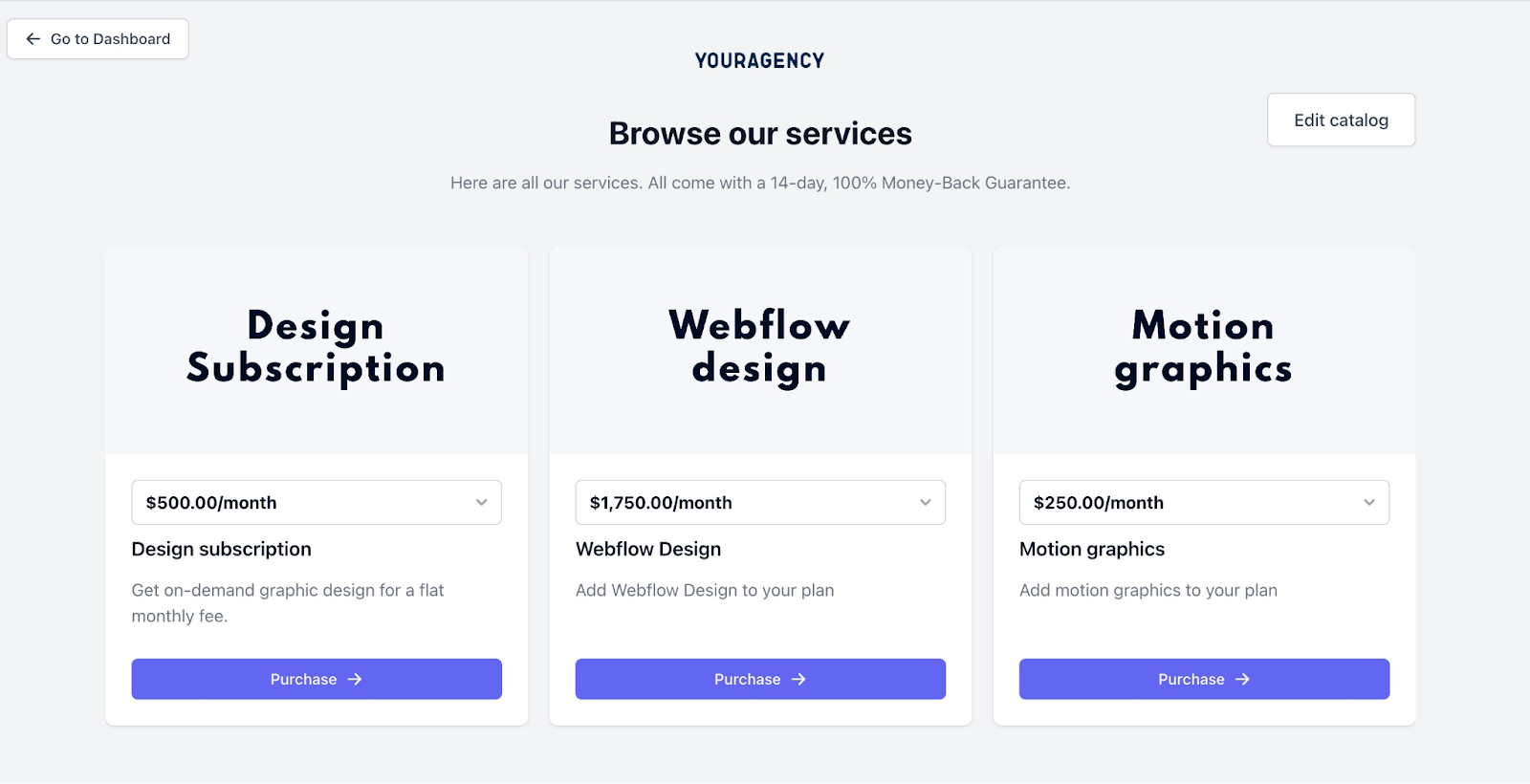
ManyRequests handles this through a services catalog where clients select and purchase a package, then complete a scoped intake form as part of that flow. By the time a request hits your queue, you already have the complete context to act on it. No more tedious back and forth.
The most common reason clients send status-check emails is that they have no other way to know what's happening. That is a visibility problem first and foremost, and not really a communication issue.
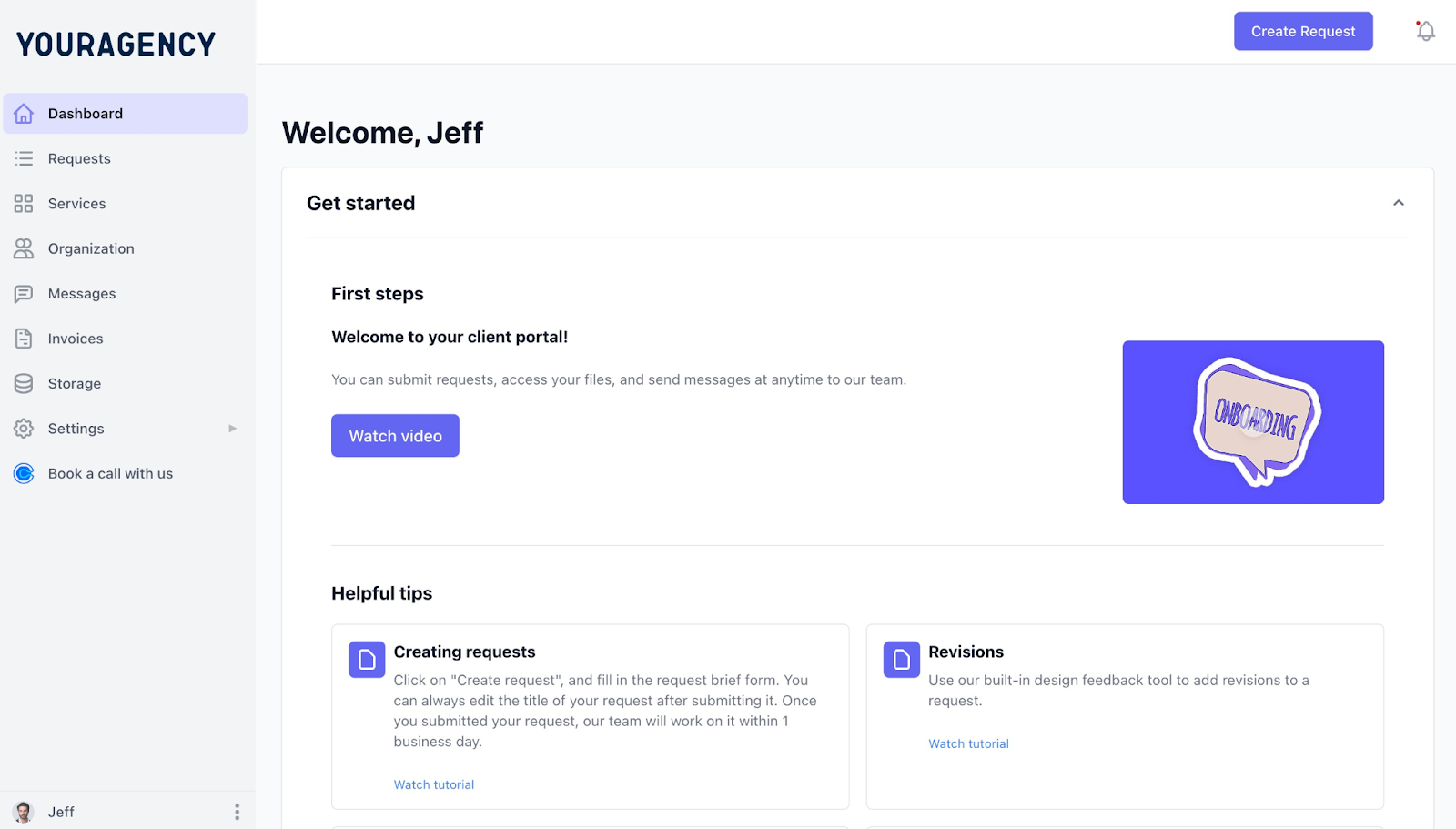
ManyRequests gives clients a white-labeled portal under your domain and branding. They log in, see their work, and communicate through a central thread rather than scattered messages across tools.
In a productized model, billing should be automatic and predictable:
ManyRequests connects billing directly to the package:
In a nutshell: If you're building a productized consulting operation and still duct-taping Stripe, a form tool, email, and Drive together, ManyRequests replaces that stack with one system built specifically for this model. Start a free trial and set up your first productized service.
You transition by extracting repeatable work from your existing projects, validating it with real clients, and building the systems to deliver it consistently before you try to scale. However, most consultants skip straight to marketing a new offer and that's the wrong order. Here’s a quick overview of how to transition properly:
Pull up your past projects and look for patterns and answer these questions:
That overlap is your first packageable service. You're not really inventing anything new here. You're simply recognizing what you've already proven works and giving it a defined scope, a name, and a price.
If nothing repeats across at least 5 to 7 engagements, your current offer may still be too custom to productize and that's useful information too.
Before you pitch this to anyone, write out exactly what the client gets, how it's delivered, and what's explicitly not included. This is the step most consultants skip, and it's why scope creep kills early productized offers.
A simple one-page service spec works fine at this stage: deliverables, timeline, revision limits, communication channels, and success criteria.
The goal is not a polished sales page. The goal is that you and the client are looking at the same thing when they say yes.
Don't start with cold outreach. Approach clients who already trust you and introduce the package as a structured version of work they've already seen you do. Offer it at a slightly reduced rate in exchange for direct feedback on the experience, not just the outcome.
You're testing three things here: whether the scope holds, whether your delivery workflow runs without intervention, and whether the pricing feels right to buyers who know your work. If all three pass, you have a validated product. If any break, you've learned cheaply.
Here’s a sample pitch for existing clients:
"We've already done [insert sample service] for you. Instead of restarting the process each month, we can move this into a structured monthly system. Same outcome, cleaner delivery, fixed price. Would you want to try it for one quarter?"
This works because it frames the package as a convenience upgrade, not a new product they've never seen before. Here’s another example:
“Hey, we’ve really enjoyed providing long-form content for your brand the past few months. What do you think of agreeing to a fixed number of blogs per month for a more structured process? We can finalize topics and outlines at the end of every month for the next month. Instead of paying per output and after a blog is published, we can just have a fixed price per month. Do you want to try it out?”
Once the package is validated, systematize how clients enter the engagement. This means:
This phase is not optional. If intake is still happening over email or Slack, your service is still custom behind the scenes, regardless of how it's packaged on the outside.
Only after Phase 4 runs cleanly should you add new packages or pricing tiers. Expanding before your intake and delivery system is solid means you're scaling chaos, not a product.
A practical rule: Never move to the next phase until the current one runs without friction. No repeatable service means nothing to package. No validation means a weak offer. No system means messy delivery. No structure means unscalable growth.
The most common mistakes in productized consulting happen when you try to scale before your service is ready to transition. Most consultants fail not because the offer is wrong, but because they packaged before they systemized.
This is the most common mistake, and it usually happens because the service looks repeatable on the surface.
Scenario: The consultant has done similar work several times, so they package it and start selling it. But when delivery starts, every client still requires fresh thinking, custom decisions, and constant input from the founder.
The fix: Run the service manually two or three more times before packaging it. If you can't hand the delivery workflow to someone else without explaining it from scratch, it's not yet ready.
A productized service without a clear scope document is just a consulting engagement with a fixed price.
Scenario: Clients will naturally expand the definition of what they bought because nothing told them otherwise. You end up doing custom work at a productized rate.
The fix: Before you sell any package, write out exactly what's included, what's not, and what happens if a client requests something outside that boundary. A short, plain-language service spec is enough. The goal is that both sides are looking at the same definition when the engagement starts.
Productized services often get priced too low because the fixed-scope framing makes them feel like a commodity.
Scenario: Consultants assume that if it's repeatable and easy to buy, it should cost less. That logic is backwards. A productized service is worth more than a custom one because the client is buying a proven system, not a best effort.
The fix: Price it based on the outcome you deliver, not the hours you save. If you're building in healthy margins from the start, scaling the service stays profitable.
Some consultants launch a productized offer while still figuring out how to deliver it.
Scenario: The sales page is live, clients are buying, and the internal process is still being built in parallel. This works once, maybe twice, before delivery quality breaks down and clients start asking questions you can't answer consistently.
The fix: Build the delivery workflow before the first client signs. Map every step, assign responsibility, and run through it at least once end-to-end before you take it to market. A delayed launch is far cheaper than a broken client experience.
In custom consulting, clients tolerate opacity because the relationship is personal and the work is bespoke. In a productized model, clients expect to know where their work stands at any given moment, just like they would with any structured service they pay for on a recurring basis.
Scenario: If clients have no way to check status without emailing you, the experience feels informal and fragile regardless of how well-structured the delivery actually is.
The fix: A client portal like ManyRequests shows active work, completed deliverables, and billing history in one place, making the service feel as professional as it actually is.
Productized consulting only works when pricing and operations move together. Most consultants get one right and leave the other broken.
The missing piece for most operators is infrastructure. A clear offer and a solid delivery workflow still break down if requests come in over Slack, billing is chased manually, and clients have no way to see what's happening with their work.
You don’t just need a better offer. You need infrastructure that supports it. Make the shift with ManyRequests. ManyRequests is the infrastructure layer to:
Start your free trial of ManyRequests and set up your first productized service today.
Productized consulting is a consulting model where services are packaged into fixed-scope, repeatable offerings with clear pricing and structured delivery.
Start by identifying repeatable work, defining a clear scope, building a delivery workflow, and testing it with existing clients before scaling.
Traditional consulting is custom. Productized services are standardized, predictable, and system-driven.
Any consulting with repeatable processes (SEO, operations, HR, finance, and even structured strategy) can be productized.
By defining what’s included and not included upfront, using structured intake systems, and enforcing delivery boundaries through your workflow.
1. See how ManyRequests works in real life. Start a free trial and experience how productized agencies centralize requests, reduce chaos, and streamline delivery, without changing their entire workflow.
2. Read our Implementation Guide to launch smoothly with your team and clients.
3. Follow us on LinkedIn and YouTube for practical agency growth strategies
4. Check out The Productize Blueprint to learn how to turn your services into a scalable, productized offer.