Free Digital Marketing Scope of Work Template [Docs / DOCX]
At some point, you’ve had clients who want more than you agreed to when you started working together. Perhaps, they want "more engagement" on social media or "better SEO rankings", and therefore need you to write another article or “refresh three old ones.”
A digital marketing scope of work helps you avoid this.
What is a Digital Marketing Scope of Work?
A digital marketing scope of work is a foundational document that specifies exactly what services you'll deliver and when you'll deliver them.
It describes what's included in your engagement (keyword research, optimized content, paid ads, social media management, email marketing, etc.) and what's not. It then provides context on:
- deadlines (when is each task due?),
- the point of contact (who reviews the work, approves it, and pays the invoice?), and
- what success looks like through specific KPIs.
Most digital marketing projects involve multiple channels, simultaneous campaigns, and changing priorities. A scope of work adapts to these changes and protects you (and your team) from working outside the agreed scope of work.
Other Reasons Why You Need a Digital Marketing Scope of Work Template
A typical digital marketing scope of work protects you in three ways generic project documents doesn’t:
1. Scope Creep
It’s typical for clients to want a “quick boost” to an underperforming Facebook campaign. Or “just a quick refresh of a 2021 article” to see if it can increase overall organic traffic. These small tweaks often mean that your team has to work extra hours and you’d probably not be paid for them.
There are acts of good faith, and there is business. And sometimes, the lines are blurred by small, unpaid work that can take up your team's billable hours.
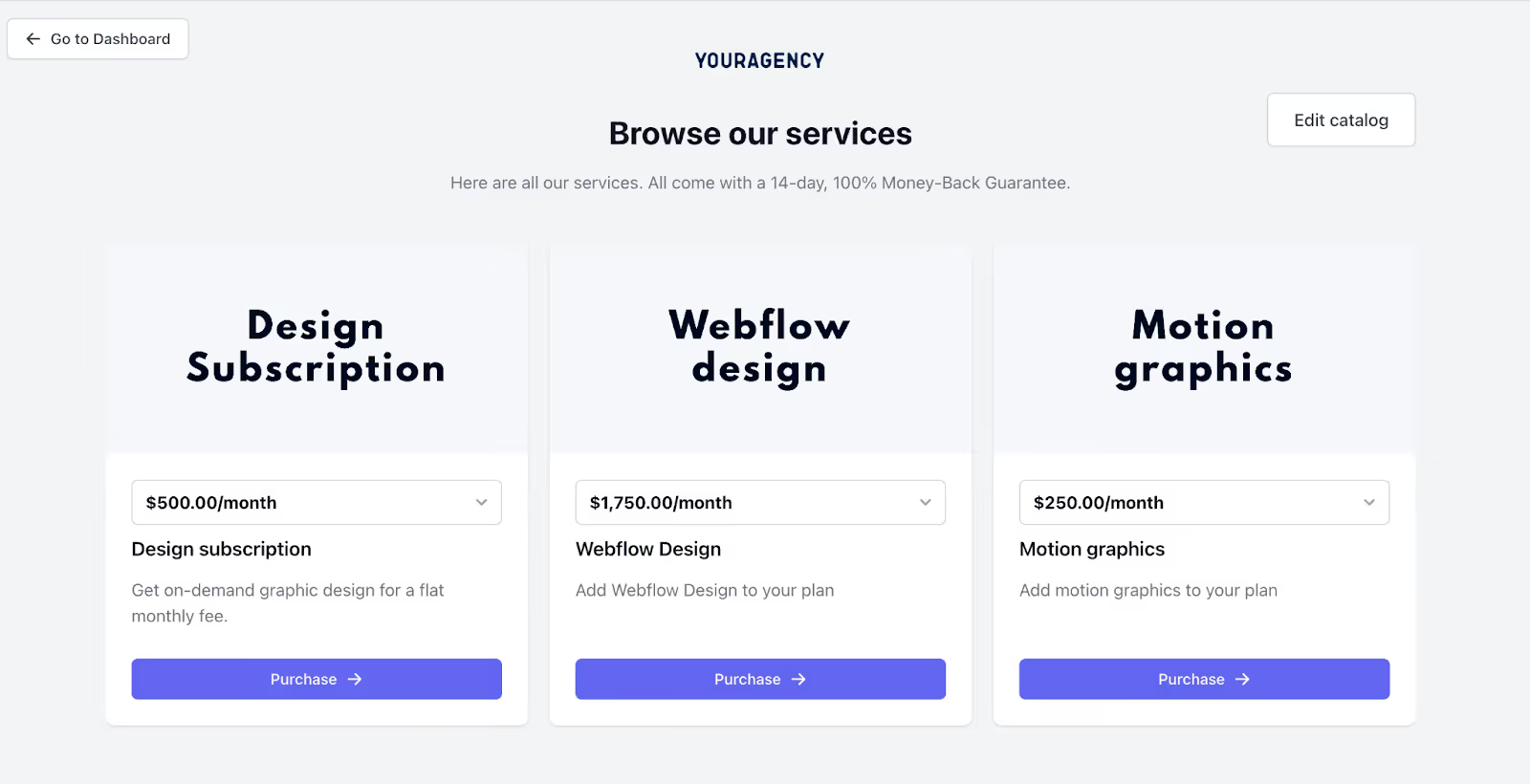
But with a scope of work, you can show your pricing structure for each service (and also specify the cost for additional deliverables). You can use the ManyRequests service catalog to even frontline all your services and the pricing structure for them. This way, your clients (or prospects) can see what each service (or add ons) will cost them before committing to your agency.
You can also customize the billing to be hourly, quarterly, or any other custom period you’d prefer.
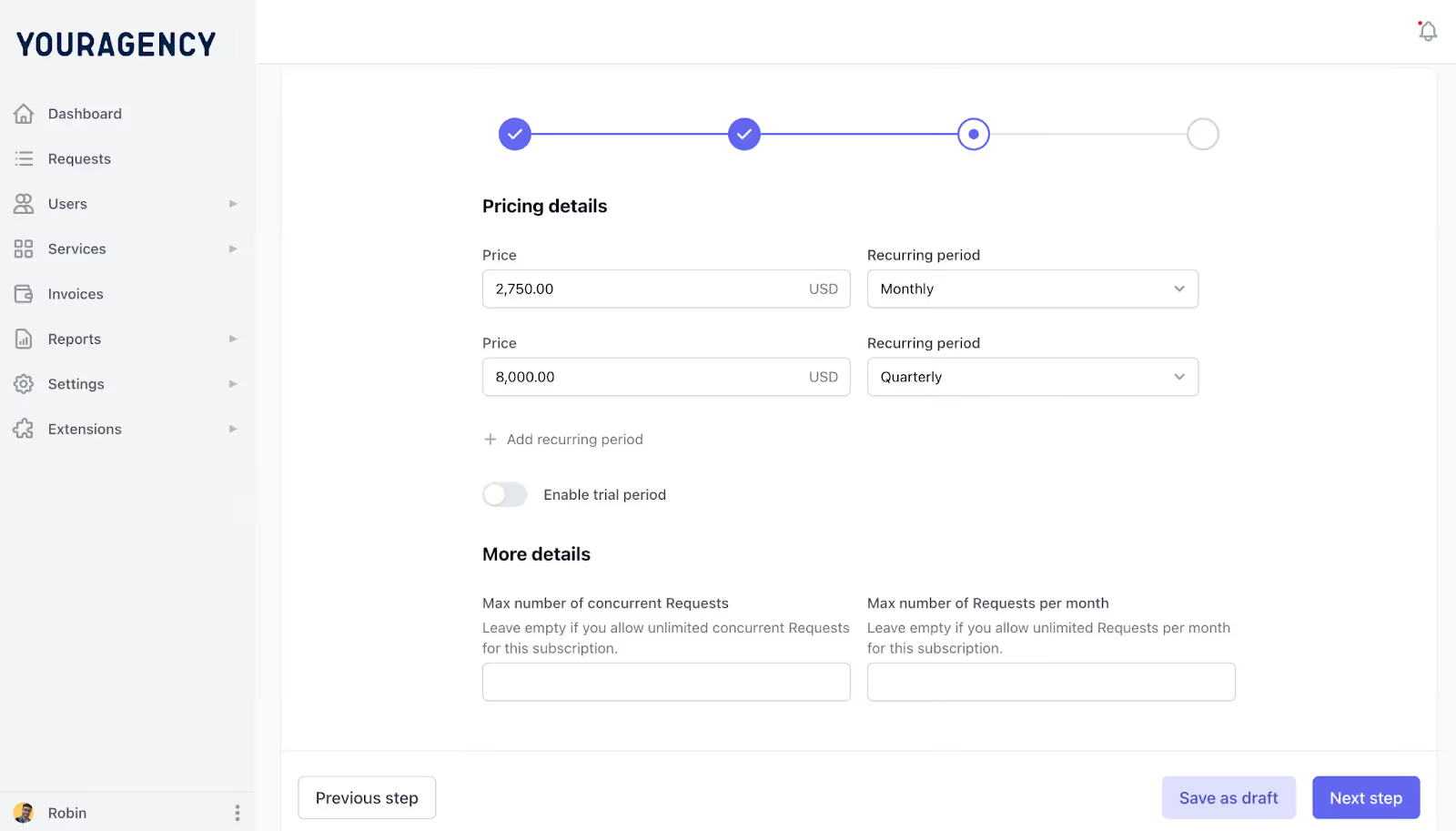
Note: While designing your services (and pricing structure), always include specific rounds of revisions. For example, “Two rounds of revisions per blog post" or "Three A/B tests per paid campaign."
Any request beyond that attracts extra fees, so you can avoid overworking your team on unpaid, endless revisions.
2. Manage Client Expectations Across Multiple Channels
A digital marketing scope of work also helps you clarify expectations. Instead of vague outcomes, you can specify the services you’ll deliver, the deadlines, metrics for success, and what is excluded from the services you’ll render.
For example, it can be as straightforward as “I will write and optimize five articles. I will not publish them on your CMS and will not design the custom images required.”
When clients understand exactly what you'll do and won’t do, and when they'll see results for their work, they're less likely to request services that are not part of the scope.
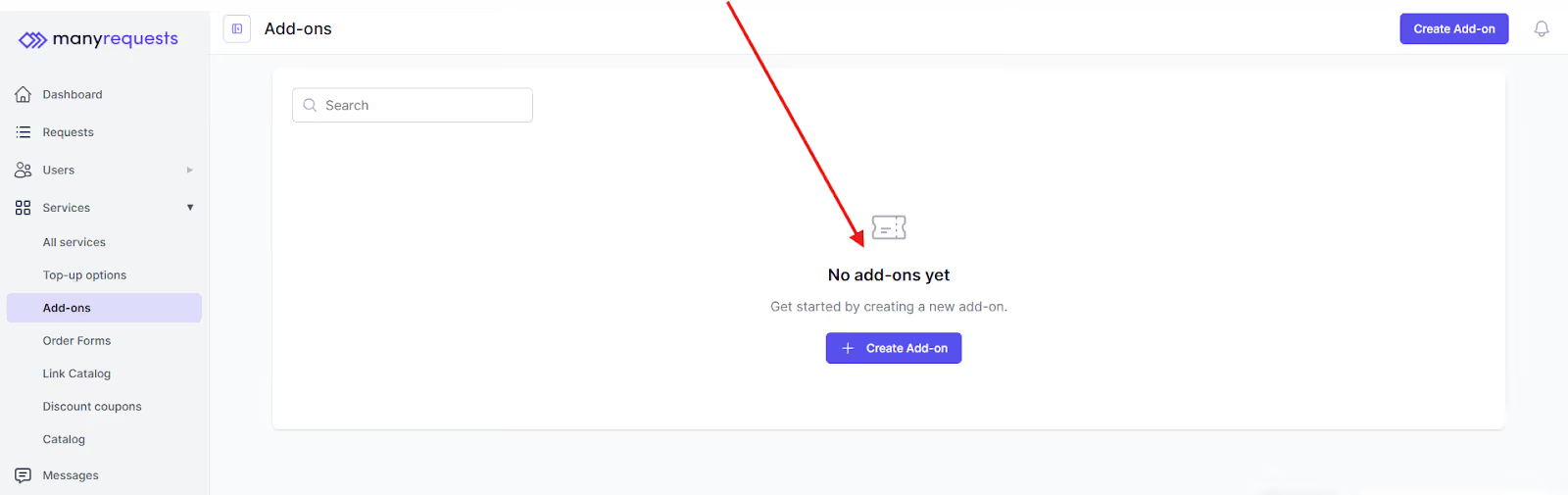
They can add more services to it though. For example, ManyRequests has a feature for “add ons” where clients can request for extra services outside the initial scope of work. They’ll be billed for this separately, but it lets you make room for extra work.
3. Improve Communication While Managing Campaigns
Sometimes, you get a retainer client who has consistent demand for a deliverable. They may need consistent services for new blog content, social media management, and YouTube videos (creation, editing, publishing) etc.
Whatever the workload is, this digital marketing scope of work establishes communication protocols on:
- What the exact jobs to be done are: Specific tasks for each service (keyword research, ad copy writing, video editing).
- When it will be done: Publication schedules, reporting deadlines.
- Who needs to approve the work: Who approves the estimated ad spend, when content is reviewed and published, and when the campaign/content strategy changes.
- Medium to receive feedback: Is it through a client portal like ManyRequests, email threads or Slack messages?
- What counts as a completed project: When does a campaign end, what are the final deliverables, and what are the performance benchmarks?
These protocols keep everyone aligned. Your clients know when to review your work and your team knows when to expect feedback.
Creating Your Digital Marketing Scope of Work
This is a six step process (but you can use our template to get started right away):
1. List of Services and Tasks
Write every service you'll provide, and be specific about what each service entails. For example:
SEO Services:
- Technical SEO audit (site speed, mobile optimization, crawl errors).
- 8 optimized blog posts per month (1,500-2,000 words each).
- 20 backlink acquisitions per quarter.
- Monthly ranking reports for 15 target keywords.
Paid Advertising:
- Google Ads campaign setup and management.
- To manage $5,000 monthly ad spend.
- 3 ad variations per campaign.
- Weekly performance optimization.
Social Media Management:
- 12 posts per month (12 on Instagram, 12 on LinkedIn, and 12 on Facebook).
- Community management (response time: 24 hours).
- Monthly analytics reporting.
List what you won't do under each service. For SEO, specify that you won’t publish on their CMS (OR if you’re not hired for paid search, state it so you’re aligned on expectations). You can also do this in section 4.
2. Project Timeline and Milestones
Show when each deliverable is due and when clients should expect results. For example, based on your agency's structure/workflow, this could look like:
- Week 1: Initial kickoff call and access to relevant data.
- Week 2-4: SEO audit completed, keyword research finalized, first content drafts submitted.
- Month 2: First set of blog posts published, paid campaigns launched, social media calendar approved.
- Month 3: First performance review, strategy adjustments based on data.
- Monthly: Content delivery by 15th, client feedback due by 22nd, final publication by 30th.
For services with longer timelines, write clear expectations to keep everyone on track.
3. Deliverables and KPIs
List exactly what clients receive and how you'll measure success.
Deliverables:
- 8 optimized blog posts (published on client's site).
- Monthly performance report (PDF, delivered via email or our client portal).
- Quarterly strategy (review/presentation).
- Campaign analytics dashboard (updated weekly).
Metrics (KPIs):
- Keyword rankings: 10 target terms in top 10 positions within 4 months.
- Social engagement: 15% increase in engagement rate per quarter.
- Email open rate: Maintain above 22% industry average.
You get the gist.
4. Out of Scope Items
These are tasks/activities that you won't render.
E.g., this project does NOT include:
- Video production or editing.
- Graphic design beyond social media templates.
- Website development or technical fixes.
- Offline marketing (print ads, events, direct mail).
- Additional platform management (TikTok, Pinterest, YouTube).
- Services outside the specified channels (we're handling SEO and content; paid ads require separate agreement).
When clients ask for these services, refer to this section and discuss additional fees or a separate project agreement.
5. Revision Policy
You need some flexibility for revisions, so specify:
Revision Limits:
- Blog posts: 2 rounds of revisions per article.
- Ad creative: 3 variations per campaign; additional variations billed at $150/set.
- Social media posts: 1 round of revisions per batch.
Whatever works for you.
Revision Timeline. Have a provision for this as well, so it can look like:
- Client provides feedback within 5 business days after submission.
- Revisions will be completed within 3 business days of receiving feedback.
- Requests beyond revision limits will require new agreement and additional fees.
6. Approval and Point of Contact
Define who approves what and how feedback is submitted. (Check the template for more information).
Point of Contact:
- All project requests submitted through Client Portal (ManyRequests).
- Urgent issues: Email with "URGENT" in subject line.
- Response time: 24 hours for standard requests, 4 hours for urgent issues.
- Monthly check-in calls: First Thursday of each month.
How to use and customize the Digital Marketing Scope of Work Template
First, download the template and follow these steps:
- Add your agency branding (logo, colors, contact information).
- Fill in client details (company name, project details, start date, etc.).
- Select relevant services from the template and delete what doesn't apply. If you're only handling SEO and content, remove the sections on paid ads and social media management.
- Customize service specifics. For example, replace the numbers (8 blog posts, 12 social posts) with your actual deliverables.
- Adjust timelines based on your agency's workflow. If you need 10 business days for revisions instead of 5, update it.
- Set your KPIs based on client goals and realistic benchmarks for their industry. A local service business needs different metrics than an e-commerce brand.
- Review with your team before sending it off. Make sure everyone understands what you've committed to deliver.
Getting the Client Sign-Off
Send this document for review before you start work with this client. You can schedule a kickoff call to walk through each section and answer questions.
Use the call to clarify:
- Which services matter most to the client.
- What success looks like in their specific situation.
- Who on their team approves deliverables.
- How they prefer to communicate (email, portal, calls).
Conclusion
A digital marketing scope of work protects your agency from scope creep and helps you manage client expectations. You can use this template to specify the services you’ll offer and when, and always refer to it throughout the project to prevent scope creep.
Download the free digital marketing scope of work template and customize it for your next client project.
And if you want to further improve your agency's structure, use ManyRequests to access features like client portal, project management, time-tracking, and automated invoicing in one platform. This way, you can manage scope creep, deliver work, and get paid without integrating another accounting software. Give it a shot for 14 days, free of charge.

.svg)