Free Interior Design Scope of Work Template [Docs / DOCX]
Your client approved the living room concept. Now they want you to redesign the adjacent dining room, at no extra cost. Or they expect you to manage contractor bidding, even though you only quoted design services. Or they're upset the custom sofa took 16 weeks, even though you never promised furniture procurement.
A scope of work stops these conversations before they start.
What is an Interior Design Scope of Work?
A scope of work defines the design services you're providing, what you'll deliver, and when the client will pay.
It separates design work (space planning, color schemes, furniture specs) from procurement (ordering furniture, managing deliveries) and project management (contractor coordination, installation oversight). It shows exactly how many revision rounds you'll provide on floor plans, renderings, and material selections.
Interior designers need this because projects involve multiple vendors, long lead times, and subjective client preferences. Without defined boundaries, "just one more tweak" becomes 15 unpaid hours of rework.
Reasons Why Interior Designers Need a Scope of Work Statement
Interior design projects collapse in three predictable ways:
1. Scope Creep Through "Small" Additions
Your client texts: "Can you just pick a rug for the bedroom too?"
That "quick addition" means you’d need to source vendors, review dimensions, coordinate delivery timing, and manage returns if they don't like it. Three hours of unpaid work because you never specified which rooms you're designing.
Or they ask you to "swing by the site" during installation for a project management task that you didn't even quote. Now you're spending billable hours solving contractor problems.
A scope of work lists exactly which spaces you're designing and which services you're providing. When clients request additions, you reference this document and discuss additional fees before doing the work.
Pro Tip: Structure your services in tiers.
Tier 1: Design only (plans, specs, shopping lists).
Tier 2: Design + procurement coordination.
Tier 3: Full-service (design, procurement, installation management).
Price each tier accordingly, so clients know exactly what they're paying for.
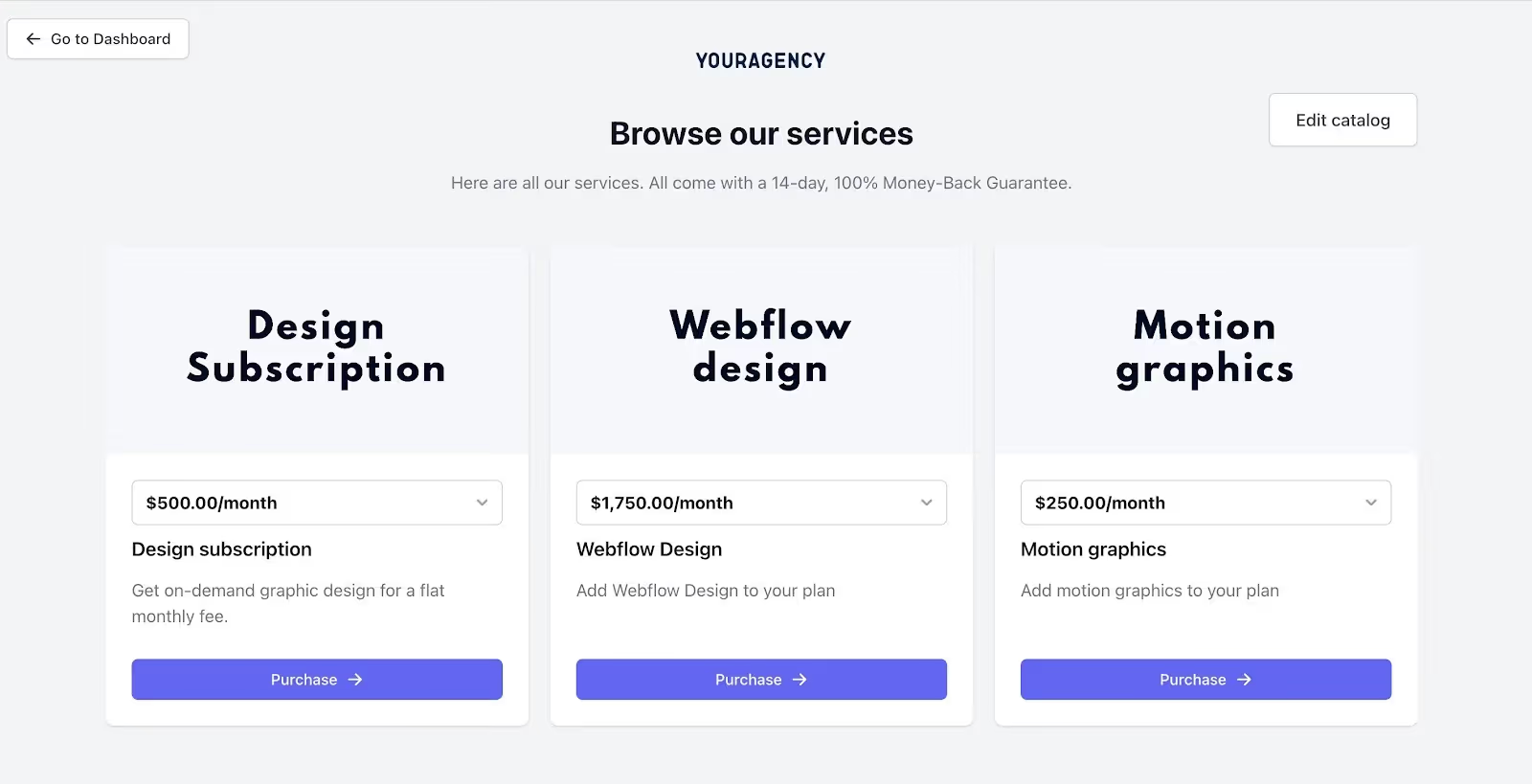
If you use a project management tool like ManyRequests, you can use our Service Catalog feature to sell each tier of services you offer to look like this:
2. Endless Revisions on Subjective Design Decisions
Some clients can be this way:
They review your furniture selections. They love the sofa but hate the chairs. You source new chairs. They want a different fabric. You provide samples. They circle back to the original chairs, but in a different finish.
Design projects may not come to an end if you don't add revision limits. The client will refine their preferences while you work for free.
Your scope of work specifies: "Two revision rounds on furniture selections. Additional rounds are billed at $150/hour”, and this prompts your clients to make decisions faster when they know revisions cost money.
You should also define revision timelines that won't drag the project out for too long. Let the client know if you need feedback within 5 business days, and how many days you’re willing to give revisions after you receive feedback. This way, you don't have to delay the project completion just because the clients didn't send in their input.
3. Confusion About Deliverables and Timelines
Client expects 3D photorealistic renderings. You quoted for hand-drawn elevations. The client thought you'd handle furniture delivery, when you specified design services only.
These miscommunications destroy client relationships and profit margins.
Your scope of work lists every deliverable:
- 2D floor plans (to scale, with furniture placement)
- Material mood boards (3 options per room)
- Furniture specifications with vendor links
- Paint color selections with brand/number
- Lighting plan with fixture specifications
It also shows realistic timelines: "Initial concepts: 2 weeks. Client review: 1 week. Revisions: 1 week. Final deliverables: 3 weeks after project start."
Clients know what they're getting and when they're getting it.
Creating Your Interior Design Scope of Work
Build your scope of work with these seven components:
1. Design Services and Deliverables
Specify exactly which design services you're providing and what clients receive.
Space Planning:
- Measured floor plans (existing conditions)
- Proposed layouts with furniture placement (2 options)
- Traffic flow analysis
- Electrical and lighting placement recommendations
Design Development:
- Color palette (3 schemes per room)
- Material selections (flooring, wall treatments, window coverings)
- Furniture specifications with vendor sources and pricing
- Fixture selections (lighting, plumbing, hardware)
Documentation:
- Scaled floor plans (PDF and CAD files)
- Elevation drawings (key walls only)
- Material mood boards (digital presentation)
- Shopping list with vendor links and item numbers
If you're offering procurement or project management, list those as separate services with their own deliverables and fees.
2.Add Project Phases and Timeline
Break the project into clear phases with completion dates.
Phase 1: Discovery (Week 1-2)
- Initial consultation and site visit
- Client questionnaire and style assessment
- Space measurements and photo documentation
- Budget discussion and project scope finalization
Phase 2: Concept Development (Week 3-4)
- Space planning options presented
- Initial material and furniture selections
- Preliminary budget estimate
- Client feedback and direction
Phase 3: Design Refinement (Week 5-6)
- Revised plans incorporating client feedback
- Final material selections and specifications
- Detailed furniture and fixture list with pricing
- Final budget breakdown
Phase 4: Documentation (Week 7)
- Complete design package delivered
- Shopping list with all specifications
- Installation guidelines and sequencing recommendations
You should also set realistic timelines. Write that custom furniture takes 12-16 weeks. Tile orders need 6 weeks. Factor in client response time—if they take two weeks to review concepts, the project timeline extends.
3. Specify what's not included
State what's not included in the project. Interior design projects can blur into procurement, project management, and construction supervision, so it's important to define your boundaries.
Add that this project does NOT include:
- Furniture purchasing and payment processing (client orders directly from vendors)
- Delivery coordination and receiving
- Installation supervision or contractor management
- Construction drawings or engineering plans
- Permitting or code compliance documentation
- Post-installation styling or accessory placement
- Warranty management or furniture repairs
- Shopping for additional spaces beyond those specified
- Custom furniture design or millwork drawings (available as add-on service at $X/hour)
- (Add any other out-of-scope service that your business won't offer).
When clients ask for these services mid-project, you can reference the document to show them that it's not included in the project, and you charge them separately for the additional service.
4. Add a revision policy
Design is subjective. State how many rounds of design you're willing to go through, before you bill them for extra work.
Add that:
Revision Rounds:
- Space plans: 2 rounds included
- Furniture selections: 2 rounds per room
- Material selections (paint, flooring, tile): 2 rounds per room
- Additional revisions: $150/hour
Revision Timeline:
- Client provides consolidated feedback within 5 business days of presentation
- Designer implements revisions within 7 business days of receiving feedback
- Major scope changes (adding rooms, changing style direction completely) require new agreement
What Counts as a Revision:
- Swapping one furniture piece for another within a similar budget = revision
- Changing room layout = revision
- Changing entire design direction (modern to traditional) = new project scope
This prevents the endless "can we try one more option" cycle that kills profitability.
5. State the budget and purchasing responsibilities
Clarify who's responsible for what financially.
Design Fees (Your Responsibility):
- Paid according to agreement (flat fee, hourly, percentage of project budget).
- Due: 50% at project start, 25% at concept approval, 25% at final delivery.
Furniture and Materials (Client Responsibility):
- Client purchases all furniture, materials, and fixtures directly from vendors.
- The designer provides specifications, vendor information, and pricing estimates.
- Client manages payment, shipping, and returns.
- Estimated budget: $45,000-$55,000 (based on current pricing; subject to change).
Client Provides:
- Access to space for measurements and site visits.
- Timely feedback on presentations (within specified timelines).
- Final decision-making authority (one point person, not designed by committee).
- Payment of all vendor invoices directly.
6. Approval Process and Communication
With interior design, you know the approval process can drag the project out longer than intended. To avoid this, define who reviews what and how decisions get made, and you don’t have to chase them around with follow-ups.
For example:
Primary Contact:
- All design reviews and approvals: [Client Name]
- Project questions: Email or Client Portal
- Urgent issues: Text (design emergencies only)
Review and Approval Process:
- Concept presentation: Scheduled Zoom call or in-person meeting
- Material selections: Submitted via Client Portal with clickable links
- Final design package: PDF delivered via email for client records
Response Times:
- Designer responds to questions within 24 hours (business days)
- Client provides feedback within 5 business days of presentations
- Delays beyond 30 days may require project restart with additional fees
7. Include Payment Terms and Project Closeout
Specify when you get paid and what happens at project end, depending on the agreement you made at the beginning of the project.
Payment Schedule:
- 50% due at contract signing (before work begins)
- 25% due at concept approval (before Phase 3 starts)
- 25% due at final delivery
Project Completion:
- Final design package delivered as PDF and includes all specifications
- Shopping list provided with vendor links and item numbers
- One 30-minute call is included for questions after delivery
- Additional design consultation available at $150/hour
Post-Project Support:
- Vendor questions: Client contacts vendors directly (designer provides initial intro if needed)
- Installation issues: Available for consultation at hourly rate
- Design changes after delivery: Billed as new project
How To Use Our Graphic Design Media Scope Statement Template
Here's how to customize our free Graphic design scope statement template to fit your agency's needs:
- Download the template from our website.
- Edit the text to add your business name and logo.
- Fill in all highlighted spaces and italicized words with your information
- Add the specific services you'll offer your client
- Review it with your team members
Conclusion
Interior design projects have so many blurred lines that may cause you to do more than agreed if you don't set your boundaries early. We designed this scope of work to help you avoid scope creep that could drag the project on for a long time without pay.
And if you experience this with many clients, ManyRequests can help you track all client requests, give you add-on features to bill extra requests they may have. We also provide a white-label client portal that lets you have full control over every client request, your team, and client relationship. You can learn more about us here and sign up for a 14-day free trial without your credit details to see how it works.

.svg)