Unlimited Design Service Guide for Creative Agencies [2026]
Learn how to build a profitable unlimited design service with pricing, workflows, tools, and proven agency systems.

William Nzewi
The unlimited design service model holds a lot of promise. Predictable revenue, scalable delivery and no scope creep. Scope is defined by the subscription.
The business model is simple. Clients pay a monthly subscription, submit requests and receive ongoing design work.
The challenge is building the systems which allow you to deliver your service consistently and profitably.
How do you manage requests, revisions, approvals, billing and communication, especially as your client base grows?
The agencies which scale this model all have one thing in common: a structured request workflow. This guide discusses everything you need to succeed with the unlimited design service.
An unlimited design service is a subscription-based design model where clients pay a fixed monthly fee and can submit as many design requests as they want.
The word "unlimited" doesn't mean every request gets worked on at the same time. In most cases, requests are completed one at a time through a queue. Once one request is approved, the next request moves into production.
This model became popular because it gives clients ongoing access to design work without the cost and commitment of hiring a full-time designer. At the same time, agencies benefit from predictable monthly recurring revenue.
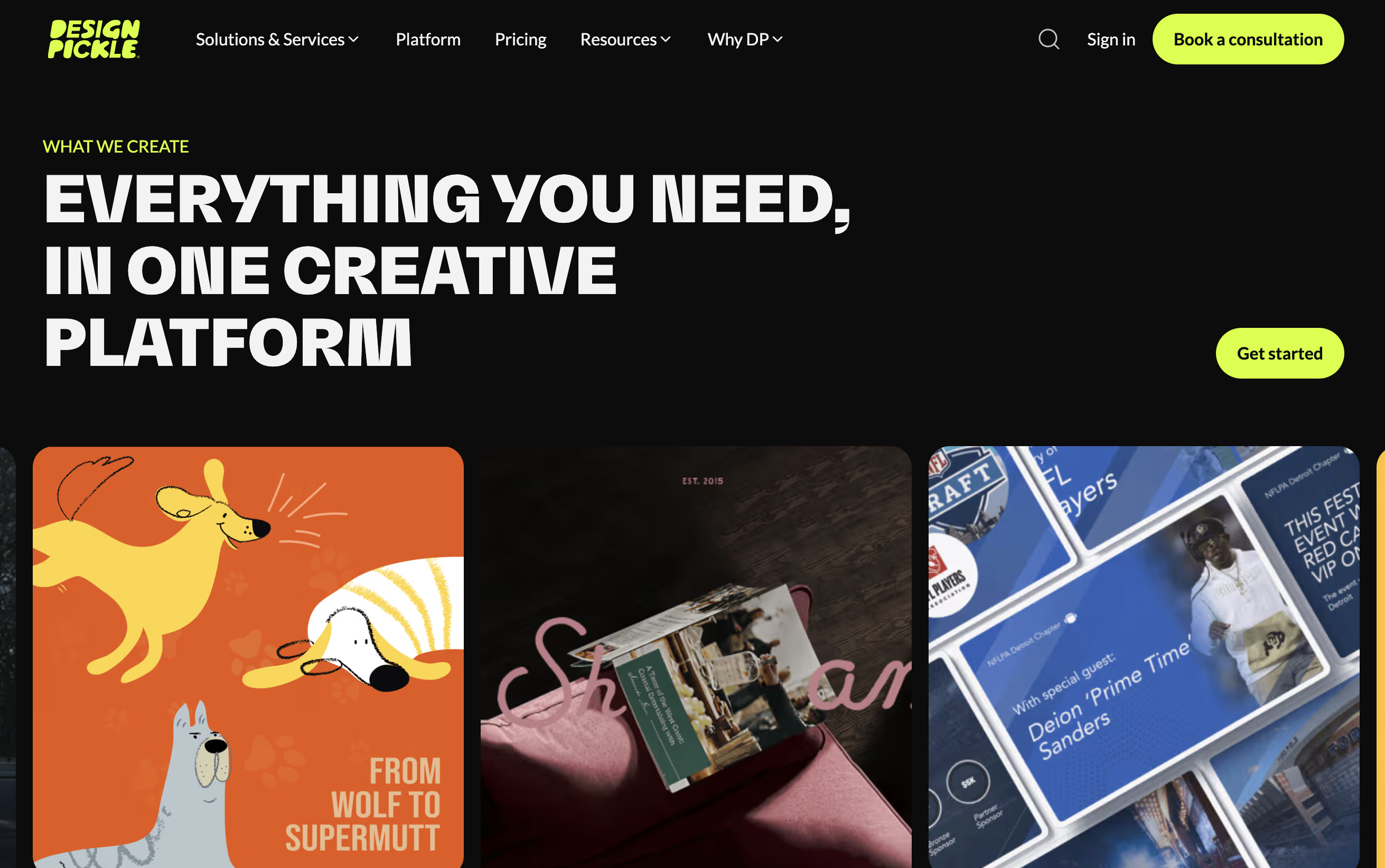
Many well-known companies, including Design Pickle and Penji, use versions of this model.
Traditional design agencies usually work on projects.
A client needs a landing page, logo, ad campaign or presentation. The agency creates a proposal, agrees on a scope, sets a timeline and charges a one-time fee.
Once the project is complete, the relationship may end until the client has another need.
An unlimited design service works differently.
Instead of paying for individual projects, clients subscribe to ongoing design support. The subscription defines what type of work is included and how many requests can be active at one time.
This creates more predictable revenue forthe agency and a simpler buying experience for clients.
Hourly design services charge clients based on time spent.
Though it appears straightforward, it often creates uncertainty.
Clients don't know exactly what the final invoice will be. Agencies spend time tracking hours and justifying time spent on tasks.
With an unlimited design subscription, pricing is predictable.
The client pays the same amount every month regardless of how many requests they submit. The agency focuses on managing capacity and delivering work efficiently instead of tracking every minute.
This makes budgeting easier for both sides.
Most agencies use one of the following models.
This model is easier to manage and usually offers the healthiest profit margins. Clients can add as many requests as they want to their queue, but only one request is worked on at any given time.
When a request is completed or approved, the next request automatically moves forward.
Higher-tier plans often allow two or more active requests at the same time.
Clients pay more because the agency is dedicating additional design capacity to their account.
This model works well for larger clients with higher design volume.
Some agencies differentiate plans based on speed.
For example:
Clients who need faster delivery pay a higher monthly fee.
Some unlimited design agencies assign a dedicated designer to each client.
Others use a shared team model where requests are assigned based on availability and skills.
Both approaches can work. It depends on your team size and service positioning.
For this to work, you need a clear system.
The agencies which scale successfully don't rely on email threads or scattered project management tools. They use structured request workflows and a dedicated system for managing requests, revisions, approvals and billing.
That operational layer is what makes an unlimited design subscription a viable and profitable business.
An unlimited design service appears simple but the execution is not.
Successful agencies follow a structured process. Without one, the service crumbles under a pile of requests and endless revisions, impacting profitability.
Here’s what the typical unlimited design workflow looks like.
The process starts when a client purchases a design subscription.
Depending on the agency, they may choose between different plans based on factors like turnaround time or number of active requests.
After subscribing, the client receives access to a branded client portal where all communication, requests, files and approvals are managed.
This is important because email is difficult to manage as request volume grows.
Instead of sending ambiguous oneliners like "I need a social media graphic", clients submit detailed requests through a structured intake form.
A good request form collects everything the designer needs before work begins, including:
The more detailed the request, the faster the work gets completed.
Poor briefs are one of the biggest reasons unlimited design services become overloaded with revisions.
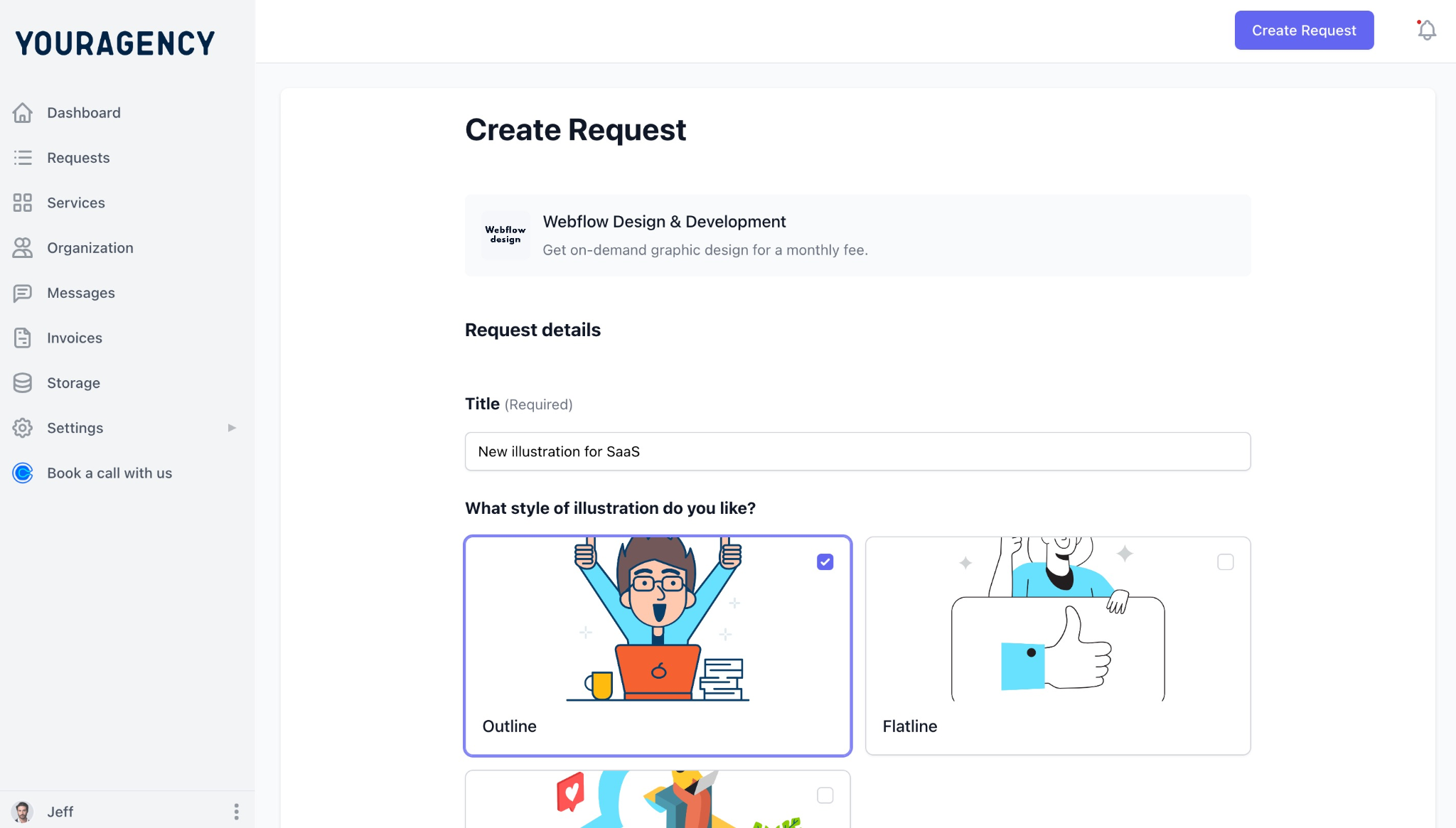
Creating a request in ManyRequests
Once submitted, the request is added to the client's queue.
Clients can usually submit as many requests as they want, but only a limited number are active at any given time based on their plan.
A client may have ten requests waiting in their queue, but only one is currently being worked on.
This protects the agency from being overwhelmed while still giving clients the flexibility to submit work whenever they want.
The queue creates clear expectations because clients can see exactly what's being worked on and what's coming next.
When a request reaches the top of the queue, it's assigned to a designer.
The designer reviews the brief, gathers any needed assets and completes the work according to the agency's turnaround time.
Most unlimited design services promise delivery within one to three business days for standard requests.
More complex requests may take longer, which is why clearly defining what qualifies as a standard request is important.
After the design is completed, the client receives the deliverable inside the portal.
They can review the work and leave feedback directly on the request, and if everything checks out, download the files.
If changes are needed, the designer makes revisions and resubmits the work.
This revision cycle continues until the client approves the final version.
Most unlimited design subscriptions include unlimited revisions, but because the process is tied to the request queue, revisions remain manageable.
Since everything is connected to the original request, it's easy for both the client and agency to track progress.
Once a request is approved, the next item in the queue automatically becomes active.
This creates a continuous workflow.
Clients always have work moving through the system and agencies always know what needs attention next.
Over time, this process creates a steady production line instead of the unpredictable workload that many project-based agencies face.
The request queue is what makes the unlimited design model work.
Without it, "unlimited" would quickly become impossible to deliver profitably.
The queue creates natural limits without making clients feel restricted.
Clients can submit as many ideas as they want. The agency controls how many are actively being worked on at once.
This balance protects delivery quality, keeps turnaround times consistent, and helps agencies maintain healthy margins.
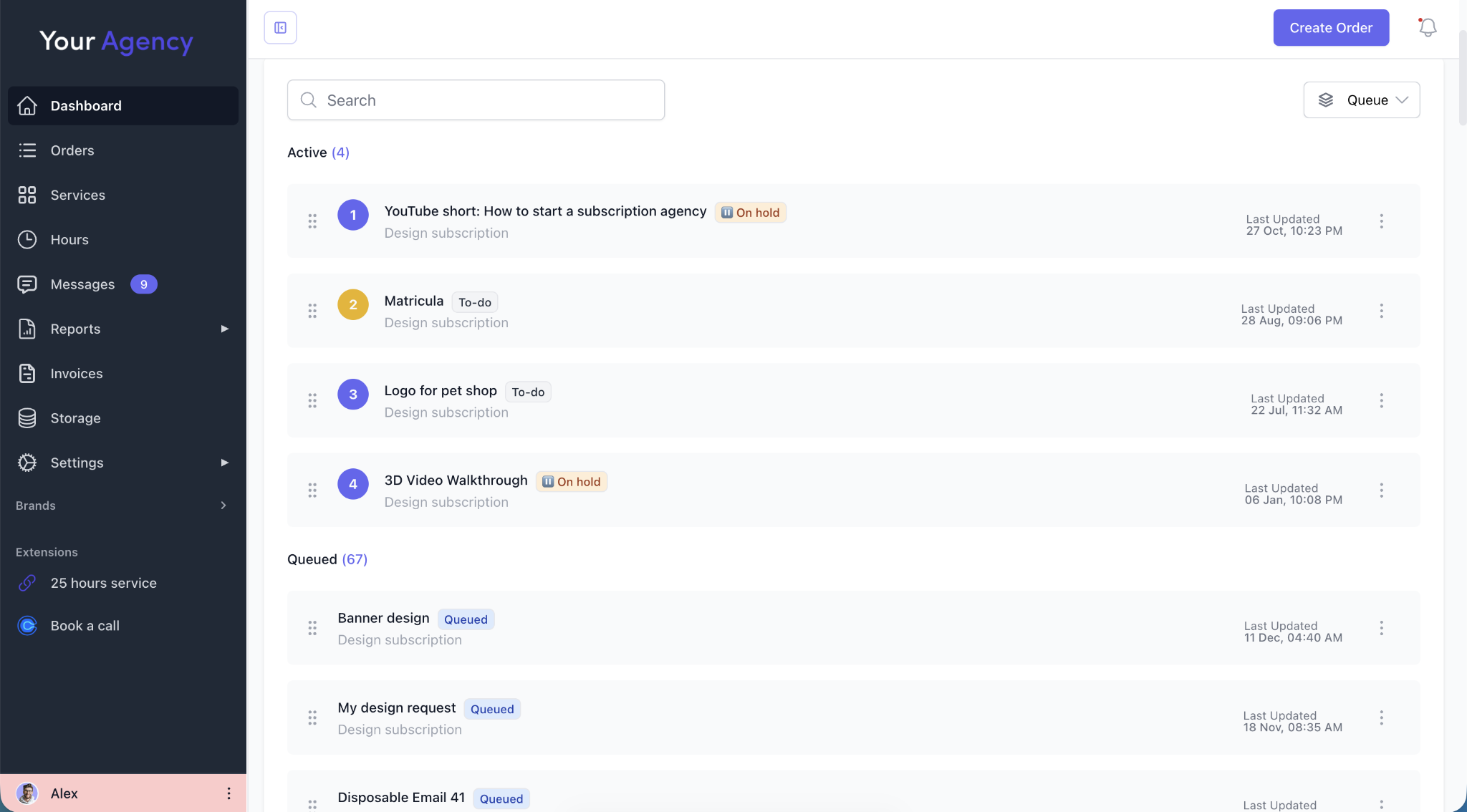
ManyRequests Request Queue
The most successful unlimited design agencies aren't necessarily the ones with the best designers, but the ones with the best systems.
When requests, feedback, approvals and delivery all happen in one place, the entire process becomes easier to manage and scale. This makes the business even more profitable.
Charge too little and your team gets overwhelmed. Charge too much and clients look elsewhere.
You have to find a price point which gives clients clear value and still leaves enough margin for your agency to grow.
The good news is that the market has already established some common pricing ranges.
Most unlimited design subscriptions fall somewhere between $1,200 and $3,500+ per month.
The exact price depends on turnaround time, number of active requests, service scope and team size.
A typical pricing structure might look like this:
Some agencies charge even more when offering dedicated designers, motion graphics, web design or premium support.
You should price based on your delivery capacity, not on what competitors charge.
How many requests can your clients have in progress at once?
The most common model, clients can submit unlimited requests, but only one request is worked on at a time.
It makes sense and works well, especially for new agencies:
Higher-tier plans often allow two or more active requests simultaneously.
Clients pay a higher monthly fee for more design capacity.
Although this model can increase revenue per client, it requires more designers and stronger internal systems.
Many agencies start with a single active request model and introduce higher tiers later.
Pricing should support your growth and unexpected workload spikes. Don't copy the pricing of agencies (like Design Pickle or Penji) without understanding the economics behind it.
Instead, start with your costs.
Ask yourself:
For example:
If that designer can effectively manage four clients, your minimum pricing would need to exceed $1,000 per client just to break even.
Most agencies aim for margins of 50% or higher.
That’s why many unlimited graphic design services charge $1,500 to $3,000+ per client each month.
Don't offer everything. It'll create problems for you.
Define clearly what clients receive.
Common inclusions are:
These tasks are relatively predictable and fit well within a subscription model.
Not every design project belongs inside an unlimited design subscription.
You might want to exclude:
The more specific your scope, the fewer disputes and revision loops you will face.
Some agencies use a credits-based model instead of pure unlimited design.
In this system, each request is assigned a credit value.
For example:
Clients receive a set number of credits each month based on their plan.
This approach helps prevent large projects from consuming too much capacity.
It also gives agencies more control over workload while still providing clients with flexibility.
If you offer (or plan to offer) a wide range of services, credits can be easier to manage than a fully unlimited model.
Always remember, unlimited doesn't mean unlimited work.
What clients are really paying for is access to your team's design capacity.
The difficult thing about this business model is managing requests, revisions, approvals, billing and communication.
Many agencies get by (for a while) stitching together tools like Trello, Stripe, Google Forms, Slack and email. But things start falling apart as request volume increases.
Requests go missing as client feedback is buried in email threads. So designers waste time searching for files as clients ask for status updates because they can't see what's happening.
That’s why successful agencies build their operations around a system designed specifically for this workflow.
Here are the core tools you need.
A client portal is the foundation of an unlimited design service.
This is where clients log in, submit requests, view progress, review completed work and communicate with your team.
Without a portal, most communication ends up in email. And it's difficult to track requests, revisions, approvals and files across multiple clients.
A structured intake form helps clients provide everything your team needs before work begins. Good intake forms improve efficiency and help keep turnaround times consistent.
Without a form, you force your designers and clients to go the email route, which creates delays and increases revision requests.
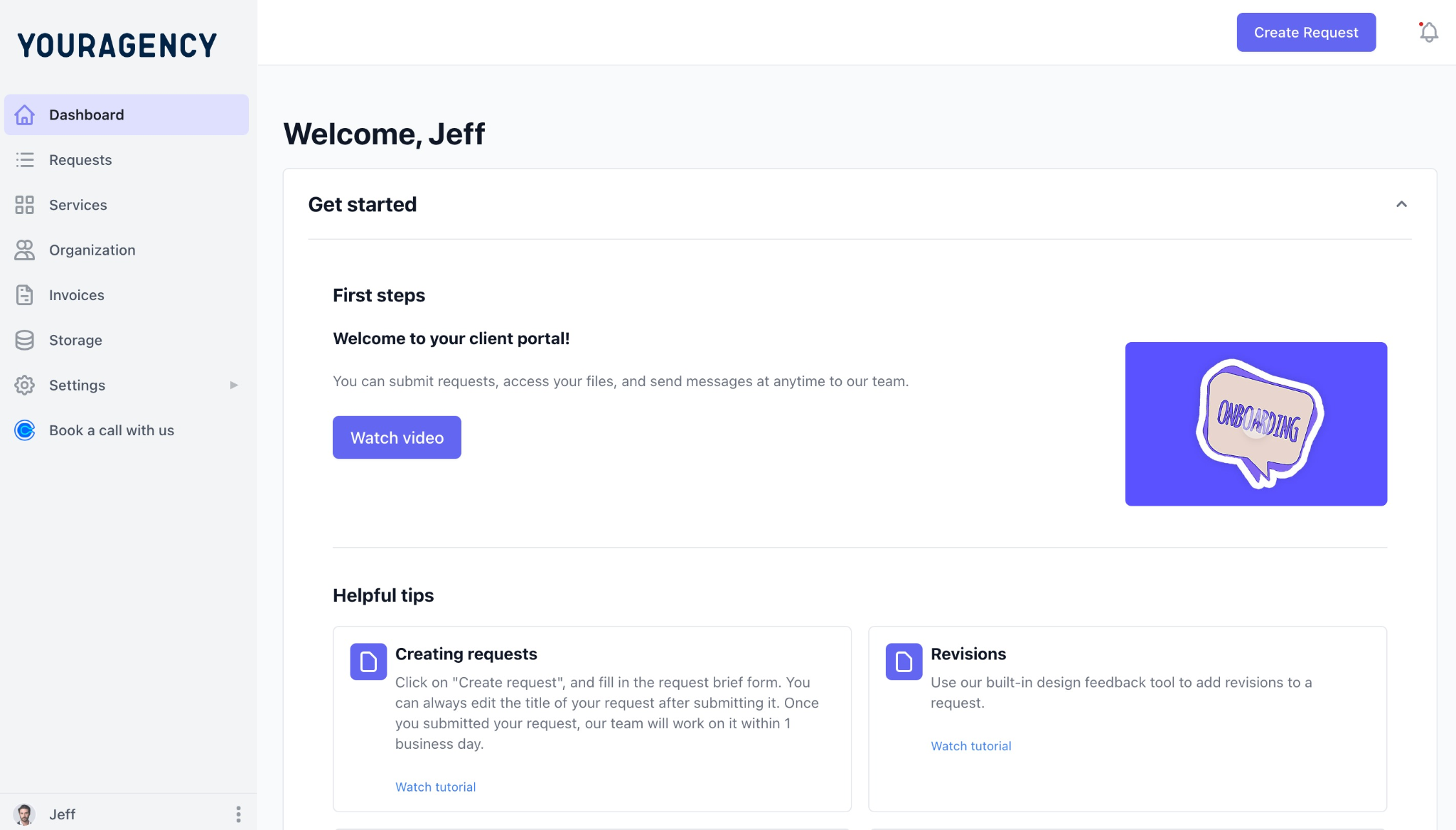
ManyRequests intake form
As we've already seen above, the request queue is what makes an unlimited design subscription possible.
Clients may submit dozens of requests but only a limited number can be active at one time.
A request queue allows you to:
As your agency grows, this becomes one of the most important operational tools in your business.
Recurring revenue is one of the biggest benefits of the unlimited design model.
But recurring revenue only works if billing is automated.
So you need a system that can:
Manually sending invoices every month creates unnecessary administrative work.
Subscription billing ensures clients stay active and payments continue without constant follow-up.
Delivering the final design is only part of the process. Clients also need a simple way to review work and provide feedback.
It gets really messy when you try to do this through email.
Comments get buried in long threads. Different versions of files get shared and designers struggle to understand what needs to change.
A better approach is to keep feedback attached directly to the request.
This creates a clear history of revisions and makes collaboration easier for everyone involved.
Many agencies try to build their own system using several different tools:
By doing this, you make clients jump between multiple platforms. Your team members switch between tools all day.
The result is scattered information and confused stakeholders.
It's wise to keep administrative work low as you grow.
You don't want your team wasting precious hours managing software rather than focusing on design delivery.
ManyRequests accommodates the unique requirements in the unlimited design workflow.
It provides a place where clients can submit requests, track progress, provide feedback and manage their subscriptions all together.
Your team gets to manage queues and delivery without jumping between multiple tools.
With ManyRequests, you can manage:
All from a single platform.
Why pay for client request management software (to handle requests) and also get productized service software when ManyRequests can do both jobs and more?
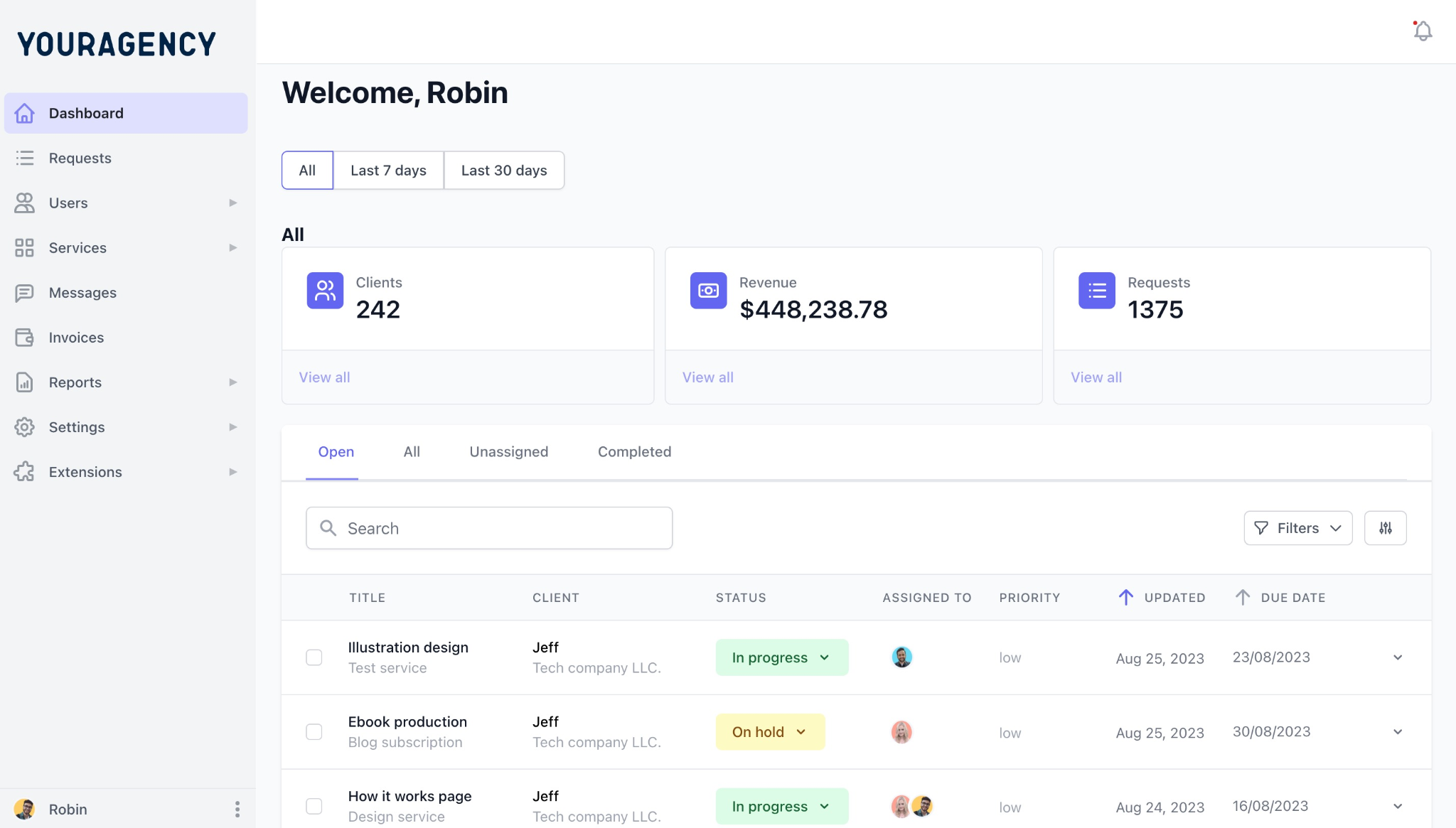
ManyRequests Dashboard
Instead of building a system from five or six different tools, you can run your entire unlimited design operation in one place.
That means less administrative work and a better experience for both clients and team members.
Systems matter, especially at scale. Agencies which grow successfully are usually the ones that invest in the right operational infrastructure early.
Many agencies struggle with this model because they focus on selling the service and overlook the systems needed to deliver it.
Here are some of the most common mistakes to avoid when running an unlimited design service.
Don't be vague about scope.
When clients see the word "unlimited," they often assume it means unlimited everything.
Without clear boundaries, you may find clients requesting more than agreed.
So clearly define what counts as a standard design request. The clearer your scope, the fewer difficult conversations you will have later
Don't let clients submit requests through email or chat.
Clients often leave out important details such as dimensions, copy, brand assets or examples. Designers then have to stop work and ask follow-up questions.
This slows down delivery and increases revisions.
A structured intake form collects everything needed before work begins.
I've already touched on this above. You might get by (with email) when you have a few clients. It becomes a nightmare when you have dozens.
A dedicated client portal gives clients one place to submit requests, review work and track progress.
It also gives your team a much clearer workflow.
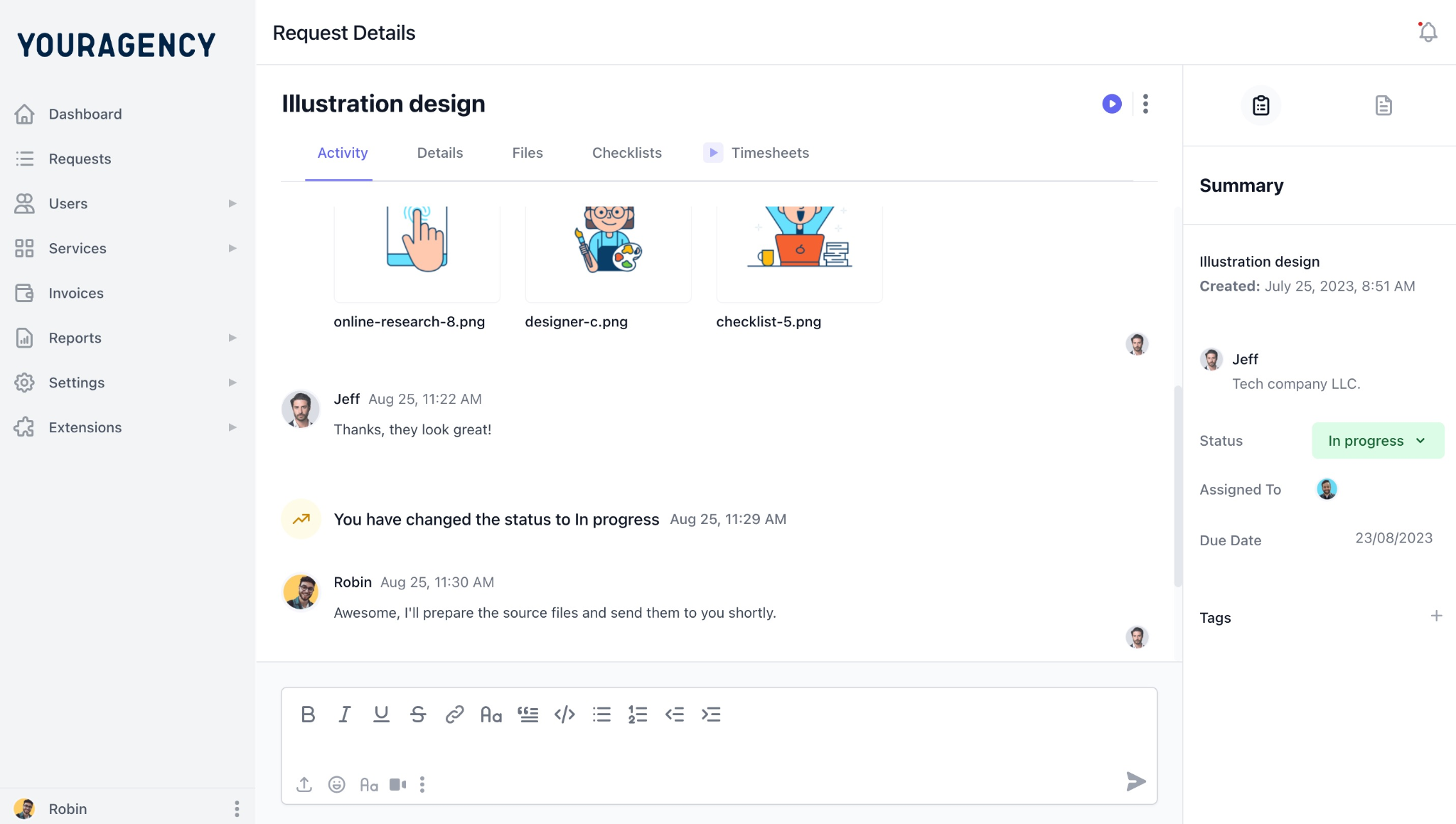
Client communication and feedback in MnayRequests
Many agency owners make the mistake of competing on price. They look at competitors and try to offer a lower monthly rate.
The problem with this approach is that unlimited design requires capacity.
Every new client increases the amount of work flowing into your queue.
If your pricing is too low, you may attract clients but struggle to make a profit.
A profitable agency can invest in better service. An unprofitable one cannot.
Your pricing should cover:
Don't advertise same-day turnaround for nearly every request.
That may work briefly, but it becomes difficult to maintain as client volume grows. And missed deadlines hurt trust.
Instead, set realistic expectations that your team can consistently meet.
If you permit this, some clients will continue requesting changes indefinitely.
This creates revision loops which consume valuable design capacity.
Define what qualifies as a revision and ensure all feedback stays tied to the original request.
Many agencies delay investing in proper workflows because they're focused on acquiring clients.
The result is that operations become more chaotic as the business grows.
What works with three clients won't with twenty.
The agencies which scale successfully build systems early.
They create structured request forms, organized queues, clear delivery processes and automated billing long before problems appear.
Don't treat cancellations as the end of the relationship. Every cancellation contains valuable information:
You miss the opportunity to improve your service and reduce future churn when you don't collect feedback.
A simple cancellation form or exit survey will reveal patterns to help strengthen your business.
You can launch a new unlimited design agency in these seven short steps.
Before you sell anything, decide exactly what your service includes.
Don't make the mistake of offering every type of design work imaginable. This leads to scope creep and lower profit margins.
Start with a focused list of services.
For example:
Then define what's not included.
Next, create your pricing tiers like the example above.
Starting out, adopt simple agency pricing models. You can always expand later
A good client portal should allow clients to:
ManyRequests offers the best client portal for agencies. That's according to over 1800 agencies which currently use our portal.
Instead of asking clients to send requests through email, create a form to collect everything your designers need upfront.
The better the information collected at the start, the fewer revisions you'll deal with later.
Don't waste time sending invoices manually every month. Set up automated subscription payments which renew automatically.
Use ManyRequests’ billing system to:
Clients should be able to submit as many requests as they want, but only a limited number should be active at once based on their plan.
Create a workflow which clearly shows:
Everyone on your team should understand how requests move through the system.
Clarity builds trust. Be clear about:
Most clients are happy to wait a reasonable amount of time as long as expectations are communicated upfront.
Once your systems are in place, focus on getting your first subscribers.
You can start with:
Your first few clients will help you identify weaknesses in your process and improve your service before scaling.
So don't worry about building the perfect system from day one. Focus on creating a repeatable process that works. Then improve your processes, hire additional designers and expand your offerings as demand grows.
An unlimited design service is a subscription-based model where clients pay a fixed monthly fee and can submit unlimited design requests.
Clients subscribe to a monthly plan, submit design requests through a client portal and receive completed work based on their plan's active request limits and turnaround times.
Most unlimited design services cost between $1,000 and $4000 per month, depending on the number of active requests, turnaround time and service scope.
Most agencies use client portals, request management, intake forms, file delivery, and subscription billing tools. ManyRequests combines all of these in one platform.
Yes. Unlimited design is highly profitable when pricing, service scope and delivery capacity are properly managed. Clear processes and strong systems are essential.
An unlimited design subscription uses a request queue and defined service scope. A design retainer typically reserves a set amount of design time or resources each month for a client.
It's difficult to succeed with the unlimited design service model without the right systems.
The right systems support a sustainable workflow to help you scale without increasing administrative work. They also guarantee a smoother client experience.
Patching together multiple tools makes success much less likely.
ManyRequests is built specifically for unlimited design agencies and productized service teams, so they can grow without the usual friction.
Click here to get started for free.
1. See how ManyRequests works in real life. Start a free trial and experience how productized agencies centralize requests, reduce chaos, and streamline delivery, without changing their entire workflow.
2. Read our Implementation Guide to launch smoothly with your team and clients.
3. Follow us on LinkedIn and YouTube for practical agency growth strategies
4. Check out The Productize Blueprint to learn how to turn your services into a scalable, productized offer.
William Nzewi is a data scientist and a writer. He likes to read and learn new things, especially about tech, business and life.