Free Branding Proposal Template [Docs / DOCX]
A prospect wants a full brand identity project and needs a branding proposal template by the end of the week. You open up a blank document and stare at it.
Most agencies send something with a nice cover, some case studies, and a price at the end. The client comes back with 11 questions, you spend three days on email, and they sign with someone else. I'll give you the structure that prevents that, plus a free template at the end.
What is a branding proposal?
It is a working document, not just a sales pitch.
The client will read it more than once, share it internally, and someone who was not on the first call will make a decision based on what is written there. It has to work without you in the room, which means specifics matter more than aesthetics.
Scope confusion, vague pricing, and no clear next step are what kill close rates. None of those are design problems. They are structural problems.
Clients go straight to pricing and scope. Organize accordingly: lead with the client's situation, back it up with deliverables and process, and let the pricing land with enough context that the number makes sense. The "About Us" section can be short, as in really short.
How to structure a branding proposal for creative agencies
Here is the section-by-section breakdown. This is exactly what goes into a strong brand identity proposal, and in what order.
Cover page and executive summary
The cover should include the client's name and project, not just your agency logo.
It sounds obvious, but Rachel Huff, a brand-agency relationship builder, put it plainly. She has seen agencies put the wrong client name on a proposal cover, call the client the wrong name in a pitch meeting, and misspell the company name in an intro email.
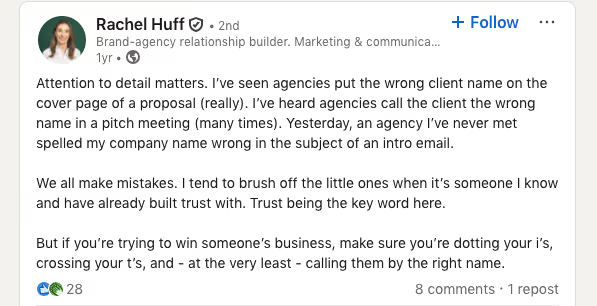
If you are trying to win someone's business, get the name right before anything else.
The executive summary (two or three sentences, maximum) states what you propose to do, why it matters for their specific situation, and what the investment covers. Anyone who skips the rest will read this, so make it count.
The client's problem and brand diagnosis
This is the section most agencies write last and most clients read first.
It should appear early, right after the executive summary. The goal is to show the client you actually understand their situation (not just that you can deliver a logo suite).
What does their brand currently communicate vs what it needs to communicate? Where are they losing ground? What changes when the identity is right? Keep it specific.
Proposed approach and discovery process
Clients buying branding are buying a process as much as a product.
Explain how your discovery process works: what inputs you need from them, whether you run stakeholder interviews or workshops, what decisions get finalized at the end of discovery, and who signs off on them.
This section reduces the anxiety that comes with handing over brand decisions to an outside agency. It shows there is a structure, not just a creative team going off to make something.
Deliverables and scope of work
Don’t be vague. Not "branding package". List every deliverable by name.
This is where scope creep starts or stops. The more explicit this section is, the easier later conversations will be.
A standard brand identity scope covers the logo suite (primary, secondary, and icon variants), the color palette with hex and CMYK values, typography system, brand guidelines document, and final asset delivery in AI, SVG, and PDF formats.
Also, list what is not included. One line is enough. It prevents the "I thought that was part of it" conversation.
Timeline and project phases
Use a simple table: phase name, duration, key deliverable, and what input you need from the client at each stage.
Clients need to see that they are involved at specific points, not just waiting to receive files six weeks later. It also sets the expectation that the project requires their participation, which prevents the bottleneck where everything stalls because the client has not responded to a brief.
Case studies and proof
Two strong case studies beat a page of logos.
Each one should follow the same pattern: what the client's situation was, what the brand work actually changed, and what the result looked like. Use a creative agency case study template if you do not have a format yet.
If you have a metric, use it. If you do not, describe the business outcome.
For example, "Launched into a new market with a brand that could hold its own against established competitors" is a real result. "Delivered a full brand identity" is not.
Marq's research shows consistent brand presentation increases revenue by an average of 10-20%.
Next steps and e-signature
Do not end the proposal with "let me know if you have any questions." End it with a specific action such as sign by a date, book a call to discuss, or confirm via e-signature to kick off discovery.
One action. Not three options. The more decisions you leave open, the more time the client has to stall.
How to price a branding project in your proposal
Pricing is where most creative agency proposals lose deals or leave money on the table. Three models actually work for branding, and the right one depends on the engagement.
Anchor the value before you show the number
Put pricing after scope. Every line in the pricing section should already exist in the deliverables section.
When the client arrives at the investment page, the goal is that they are thinking "this covers everything we discussed" rather than "what am I paying for?"
Tiered options work well for branding: base, standard, and full engagement. They give the client a sense of control, and most will choose the middle option. Structure the tiers so the middle one is what you actually want to deliver.
Turn your branding proposal into a repeatable system
The template covers all nine sections above, pre-structured for branding engagements. Available in Google Docs. The sections that change per client are the brand diagnosis, scope of work, and case study.
Everything else, like the process explanation, timeline structure, proof framework, and CTA, stays the same across proposals.
Save a master version with placeholder text for those three sections. When a new prospect comes in, duplicate it, fill in the diagnosis and scope, swap the case study for the most relevant one in your library, and update the pricing. You’ll have a complete proposal in under two hours.
Once the proposal is signed, most agencies forward it to their project lead, start a Slack thread, and email the client asking for brand assets. That is the gap between winning the pitch and delivering on it.
With ManyRequests, your client gets a dedicated portal to submit assets, track deliverable status, and communicate with your team in real time without the email thread that reaches 47 messages in week two. Billing ties to delivery milestones automatically.
Wrapping up
A branding proposal is not a formality. It is the first real signal of what it will be like to work with your agency. Clients who read a vague proposal and sign anyway are the ones who come back later with scope disputes and revision requests that were never agreed to.
Get the structure right, then use the template to make it repeatable, so you spend your time on the work that actually wins clients, not rebuilding the same document from scratch every week.
Download the free branding proposal template here. Try ManyRequests free for 14 days, and see how they handle the delivery side once the proposal is signed.
FAQs
How to write a branding proposal?
Start with the client's situation, not your agency credentials. Lead with a diagnosis of their brand problem, follow with your proposed approach and exact deliverables, then present pricing after the scope is clear. End with one specific next step. The structure that closes branding proposals is always the same: show you understand the problem before you show what you charge to fix it.
How long should a branding proposal be?
Between 10 and 15 pages for a full brand identity engagement. Shorter for a logo-only or brand refresh scope. Length is less important than specificity. A 10-page proposal with a precise scope of work and clear pricing will close more reliably than a 30-page one heavy with methodology. Proposify's data from 2.6 million sales documents puts the ideal length at 11 pages across 7 sections.
What is the difference between a branding proposal and a pitch deck?
A pitch deck is a presentation built for a live conversation. A branding proposal is a working document that specifies what gets delivered, when, and for how much, and that the client signs. Both can appear in a sales process. But the proposal is the document that closes the deal and defines the engagement. It has to work without you in the room.
.svg)