Free Video Production Scope of Work Template [Docs / DOCX]
Adetola Rachael Iyanuoluwa

At some point, you've had clients who want more than you agreed to when you started working together. Perhaps they asked for just one more scene in the final cut or a quick B-roll addition to make the video more engaging (not that it wasn't already engaging).
A video production scope of work helps you avoid this.
A video production scope of work is a foundational document that specifies exactly what video assets you'll deliver and when you'll deliver them.
It describes what's included in your engagement (pre-production meetings, shooting days, editing rounds, color grading, sound design, etc.) and what's not. It also provides context on:
Most video production projects involve multiple stakeholders and technical requirements that may change during production. A scope of work adapts to these changes and protects you (and your team) from working outside the agreed scope.
A typical video production scope of work protects you in three ways that generic project documents don't:
It's typical for clients to make other requests during a shoot day. These small requests often mean your editor works extra hours and you probably won't be paid for them.
There are acts of good faith, and there is business. And sometimes, the lines are blurred by small, unpaid work that can eat up your team's billable hours.
But with a scope of work, you can show your pricing structure for each service (and also specify the cost for additional deliverables).
You can use the ManyRequests service catalog to frontline all your services and the pricing structure for them. This way, your clients (or prospects) can see what each service (or add-on) will cost them before committing to your agency.
You can also customize the billing to be per project, per shoot day, or any other custom period you'd prefer.
Note: While designing your services (and pricing structure), always include specific rounds of revisions. For example, "Two rounds of revisions after rough cut delivery" or "Three color grading adjustments per project."
Any request beyond that attracts extra fees, so you can avoid overworking your team on unpaid, endless revisions.
A video production scope of work also helps you clarify expectations.
Instead of vague outcomes, you can specify the services you'll deliver, the deadlines, technical deliverables, and what is excluded from the services you'll render.
For example, it can be as straightforward as:
"I will shoot a 3-minute brand video with two camera angles and deliver the final cut. I will not provide raw footage unless purchased separately and will not create additional social media versions without an add-on."
When clients understand exactly what you'll do and won't do, and when they'll see the finished video, they're less likely to request services that are not part of the scope.
They can add more services to it, though. For example, ManyRequests has a feature for "add-ons" where clients can request extra services outside the initial scope of work.
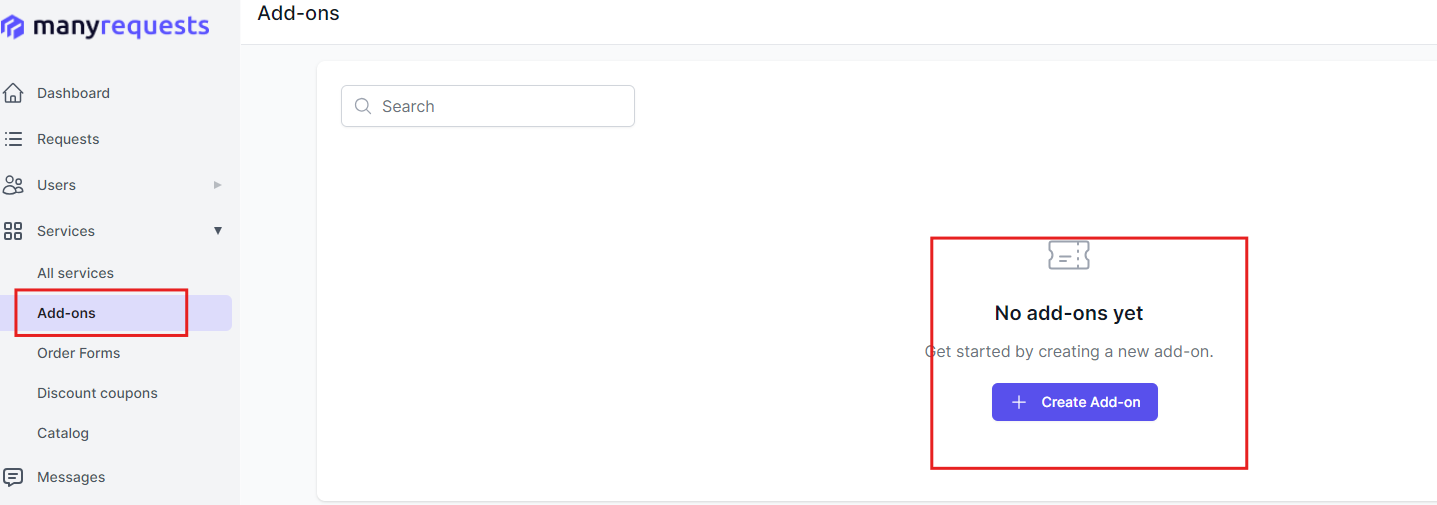
They'll be billed for this separately, but it lets you make room for extra work.
Sometimes, you get a retainer client who has a consistent demand for video content. They may need regular services for brand videos, social media content, testimonial interviews, and product demos.
Whatever the workload is, this video production scope of work establishes communication protocols on:
These protocols keep everyone aligned. Your clients know when to review cuts, and your team knows when to expect feedback.
This is a six-step process (but you can use our template to get started right away):
Write every service you'll provide, and be specific about what each service entails. For example:
Pre-Production Services:
Production Services:
Post-Production Services:
List what you won't do under each service. For production, specify that you won't provide raw footage (or if you do, state the additional cost). If you're not hired for animation or motion graphics, state it so you're aligned on expectations. You can also do this in section 4.
Show when each deliverable is due and when clients should expect results. For example, based on your agency's structure/workflow, this could look like:
For projects with longer timelines or multiple videos, write clear expectations to keep everyone on track.
List exactly what clients receive and the technical specifications for each deliverable.
Deliverables:
Technical Specs:
These are tasks/activities that you won't render.
For example, this project does NOT include:
When clients ask for these services, refer to this section and discuss additional fees or a separate project agreement.
You need some flexibility for revisions, so specify:
Revision Limits:
Whatever works for you.
Revision Timeline. Have a provision for this as well, so it can look like:
Define who approves what and how feedback is submitted. (Check the template for more information.)
Point of Contact:
First, download the template and follow these steps:
A video production scope of work protects your agency from scope creep and helps you manage client expectations. You can use this template to specify the services you'll offer and when, and always refer to it throughout the project to prevent scope creep.
And if you want to further improve your agency's structure, use ManyRequests to access features like client portal, project management, time-tracking, and automated invoicing in one platform. This way, you can manage scope creep, deliver work, and get paid without integrating another accounting software. Give it a shot for 14 days, free of charge.