The Productized Service Guide: How to Build, Price, and Scale [2026]
Learn how to build a productized service with pricing, workflows, automation, and scalable delivery systems with this Productized Service Guide

Peace Akinwale
In 2017, Robin Heyden, who's now the CEO and co-founder of ManyRequests, launched the Many Pixels design agency. For a flat monthly fee, clients submitted graphic design requests and got their designs within 48 hours. He didn't use statements of work, hourly rates, or renegotiate scope every time a new project came through the door.
By the time he exited, Many Pixels had grown to more than 40 full-time designers and multi-million dollar ARR using that same fixed-price, repeatable model he launched with in year one.
Robin now runs ManyRequests, a client portal and operations platform for productized service businesses to manage requests, invoicing/payments, and delivery at scale. In this article, I draw on his experience to provide a framework to help you start, price, and scale your productized agency business.
A productized service model is a service sold at a fixed price with a clearly defined scope and a repeatable delivery process. This means the client doesn't get a proposal, negotiate scope, or wait on a quote to get started.
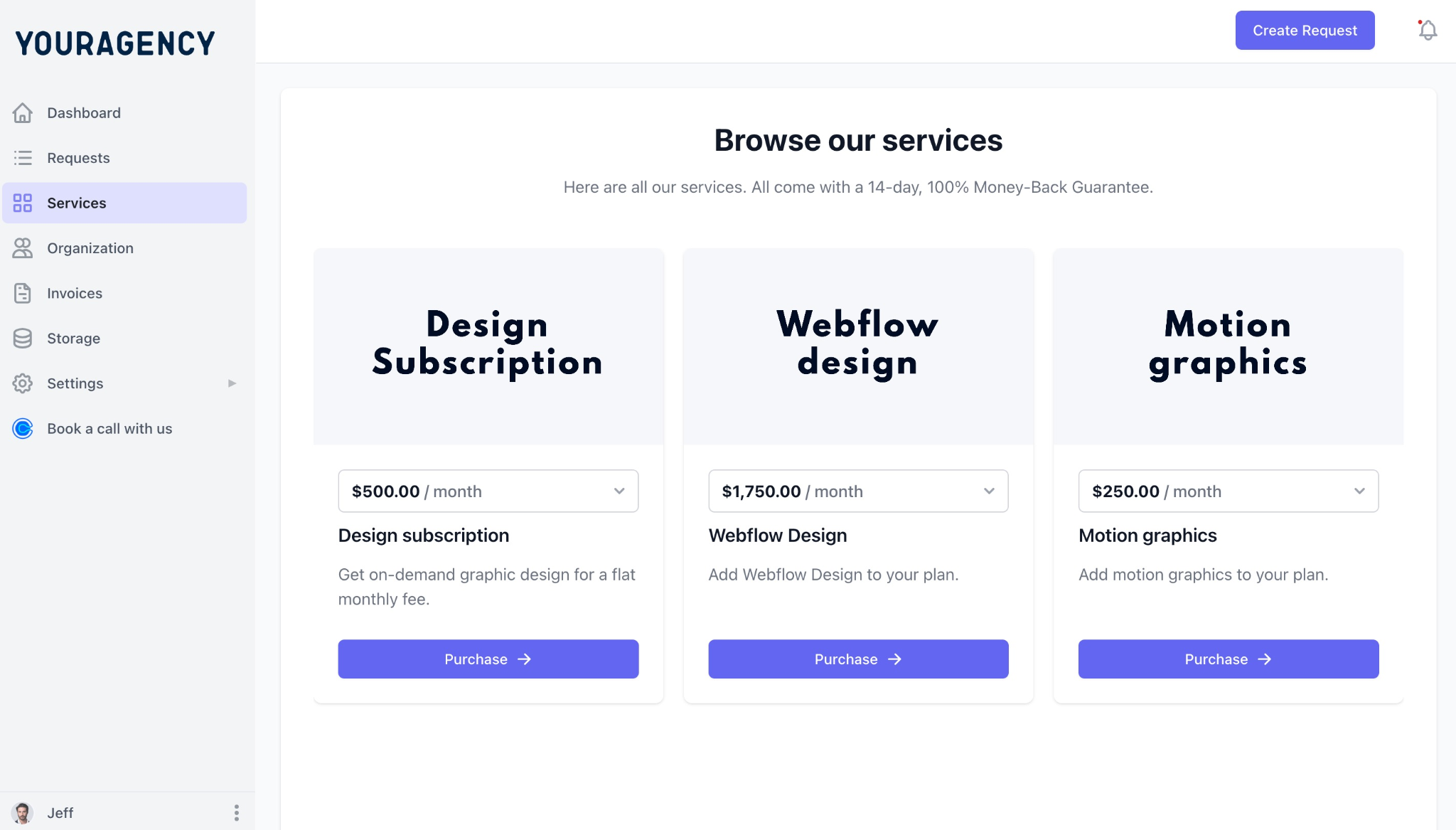
They simply find your pricing page, choose a plan, fill an intake form (which becomes the brief), and your team gets to work. If you use the ManyRequests client portal for your agency, that service catalog looks like the image below:
The traditional agency model is the opposite.
1. Predictable, recurring revenue: Because clients pay a fixed monthly fee (or purchase on a repeatable schedule), you know your workload every month. That predictability helps you hire better, know when to invest in marketing, and plan capacity.
2. A more scalable business: A well-defined service scope reduces scope creep. You can build repeatable delivery processes and delegate tasks so the business runs without you.
3. Easier to sell: Because productized services are packaged and the price is fixed, there's no back-and-forth negotiating scope. Clients buy off the shelf and you execute, which reduces the sales process considerably.
4. Paid upfront: Many freelancers and agency owners wish to be paid upfront. With a productized service, that's possible. You set your packages, attach a price, and get upfront, which also filters out clients who aren't serious.
Read more: What to Do When a Client Doesn't Pay: A Step-by-Step Guide.
5. Better client experience: Rather than calls to scope a project and present a proposal, clients can order your services directly from your website, like buying from Amazon. The experience is faster and more professional, and it sets clearer expectations from day one.
There are productized services across nearly every service category. The common thread across all of them is the fixed prices, defined deliverables, and a repeatable delivery process that does not require the owner to be involved in every project.
Want more inspiration? We made a list of 100 productized service businesses.
Before you package your service, you need to decide how you'll charge for it. This helps you know your target Ideal Customer Profile (ICP), how you'll deliver the work, and what your monthly recurring revenue (MRR) would look like.
There are three models productized service businesses use:
This is the best model for services with a clear start and finish structure. Think SEO audits, brand identity kit, and website migration. The deliverable is concrete enough that both sides know exactly when it's done.
DraftDev, a content marketing service for software companies, charges a flat rate per-article for research, writing, editing, and publishing. The client approves the brief and pays upfront. There's no retainer, ongoing commitment, or ambiguity about what they're getting.
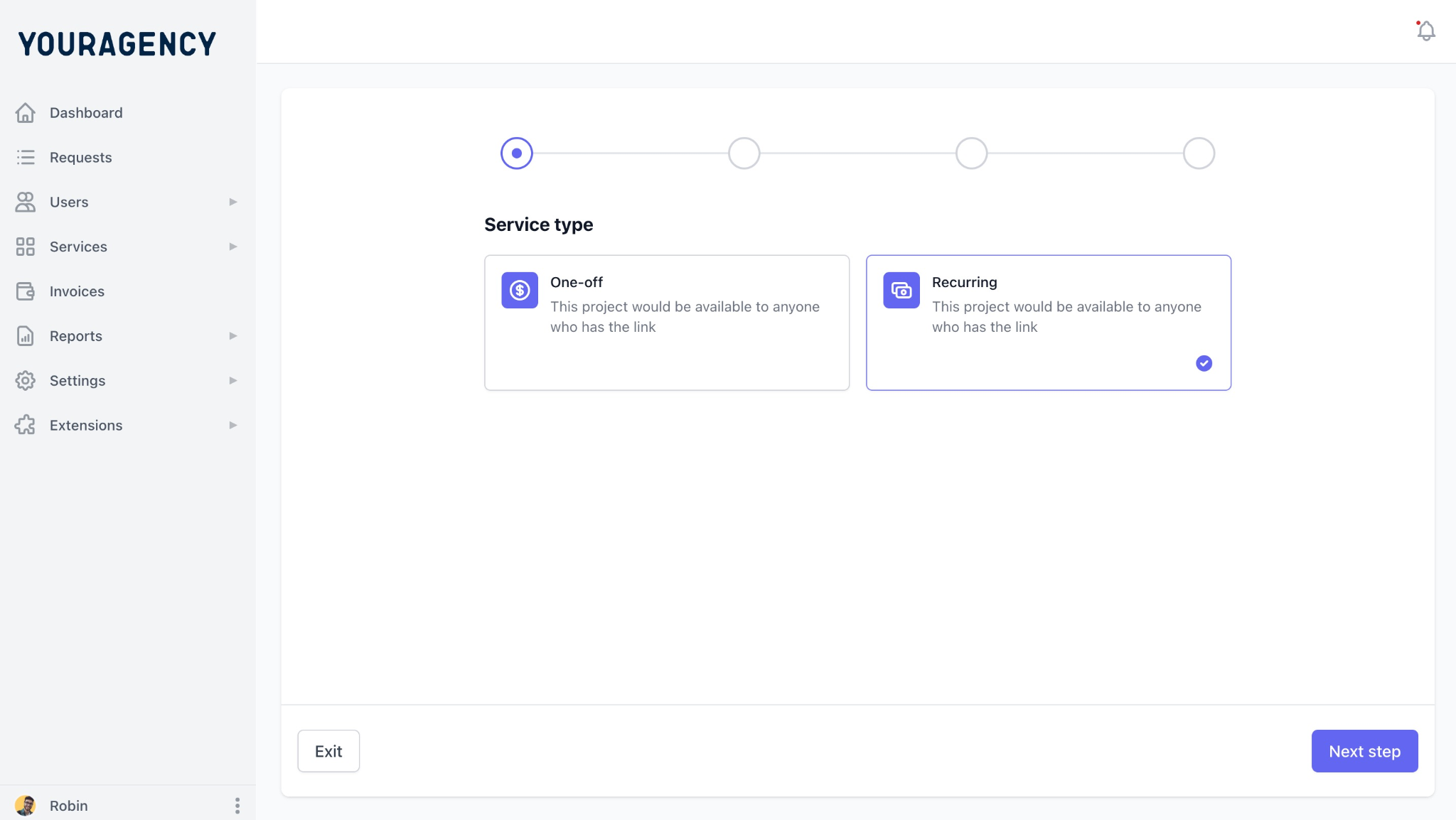
All you'd need to do is to set it up in your service catalog via ManyRequests, and your client can pay before you do the work:
The main limitation of one-off pricing is that every month starts at zero. You deliver the work, and then you're selling again.
A retainer ties a recurring monthly fee to a defined volume of work. The client pays the same amount every month and receives a consistent output in return.
This is where predictable revenue starts. You know the client is paying $1,500 next month because the agreement says so. You know what you're delivering because you have a clear scope.
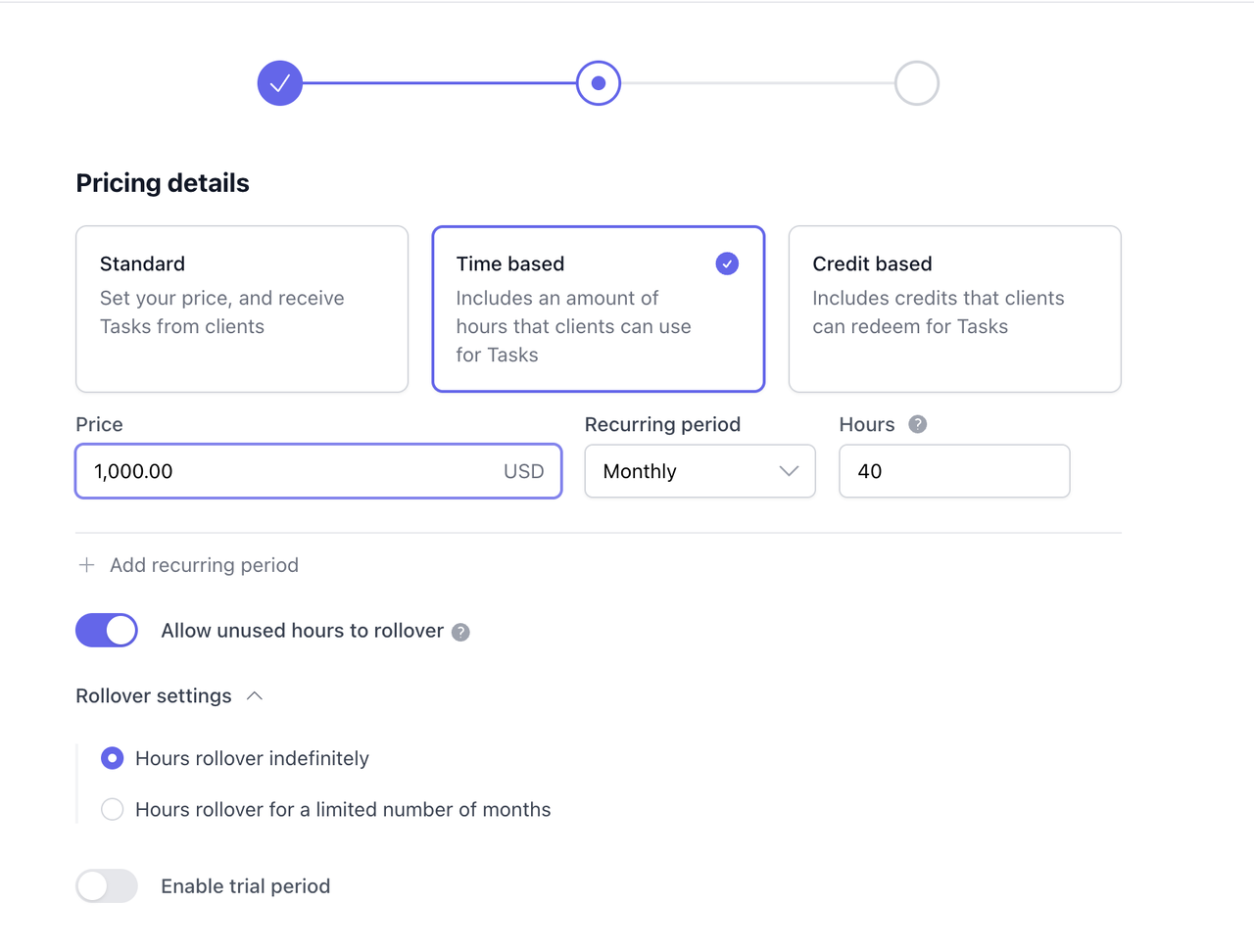
You can also set a retainer pricing structure like this on ManyRequests. This helps you create services that are on a retainer basis so prospects who are the best fit for them can buy. They can renew the service or pause if you want that functionality enabled, directly from the ManyRequests client portal.
The retainer is the most common starting point for productized agencies because it creates recurring revenue without the operational complexity of an unlimited queue.
The unlimited model charges a flat monthly fee for ongoing access to your service, with client requests worked through a queue one at a time.
The idea is that clients pay a fixed amount as a subscription and can submit as many requests as they have. You work through them in order, completing one before moving to the next. Because requests are queued rather than guaranteed in parallel, you can serve many clients with a predictable team capacity.
Hatchly offers unlimited graphic design starting at £950 per month, one active request at a time. WPBuffs does the same with their WordPress support service. You can also set it up in ManyRequests, and it can look like this:

The downside of this productized service model is the complexity. Managing a growing queue across many clients requires strong processes and clear expectations from day one. Clients also need to understand the queue model before they buy; otherwise "unlimited" sounds like they can make as many requests as they have, which isn't so.
If Robin would sum what it takes to productize your service into three points, it would be (1) to focus on a niche, (2) set expectations on what your service does and doesn’t do, and (3) create systems to automate your process. The elaborate version of these three tips are:
In a traditional agency, the client defines the work. They come in with a problem, you scope a solution around it, and the engagement takes shape from there. In a productized service, you decide what you're selling, who it's for, what it costs, and how you’ll deliver it. Then you find clients who fit that.
In practice, it means answering these three questions.
If you read this and think “but what if a client needs something different?” That’s the right question, which is why you still have to talk to them. Wrote more about that in the third point.
Niching down is one of the advice freelancers and agency owners avoid because it feels like turning clients away.
Flowout does unlimited Webflow design and development, not general websites design and dev. Same for WPBuffs. Hatchly does the same too; graphic design for small businesses.
None of these agencies are hedging. Their specificity is why they can sell without a discovery call, price without a proposal, and deliver without reinventing the process each time.
Focusing on a niche helps you:
When picking a niche, you should also ask the question "what does a specific type of client need on a recurring basis, and are they already paying someone for it?" instead of asking “what am I good at?” In other words, you need to follow the money.
But before you commit to an idea, Robin says you should pressure test it with these questions:
Knowing your niche is step one. Knowing the clients worth pursuing within that niche is step two. Two clients in the same niche can look nearly identical and perform completely differently.
Take a video editing service targeting YouTubers for example. A channel with a few hundred subscribers and no monetization might try the service for one month and go back to editing themselves.
A channel making $8,000 monthly from brand deals, publishing three videos per week is a different client entirely. The second type has the volume, the budget, and the urgency. The first has none of those reliably.
To find the right client type, talk to potential clients before you finalize your offerings. You can offer them something for their time — even fifteen minutes is enough. In those conversations, ask questions that help you know:
Five of these conversations from people who may need your service can help you confirm your assumptions or show you what you need to change in your packaging before you launch the product.
Maximilian Fleitmann did the same thing when he started Magier (formerly Magic Design), and it helped him quickly narrow down to the type of clients they need to pitch. He talked about it here, as well as how they grew to a multi-million dollar agency:
When you’ve done that, look for patterns among the people most likely to say yes and stay. What's their team size? Their monthly revenue? How seriously do they take the problem? The more attributes your best clients share, the more precisely you can find new ones who look like them.
One thing worth doing with everything you learn in those conversations is to use the exact language clients use when describing their problem in your marketing copy. If someone says "I spend every Sunday night on edits instead of with my family," use that line on your service page. It's persuasive and speaks to the pain others probably feel.
When building your packages, work through the decisions that affect every client relationship. You need to decide
Then build the delivery process before you take a paying client. Map out how requests would come in, who handles each type of work, and what the output would look like when it's done. How will you submit it too — an email, or a client portal?
Test your process internally first, especially if you’re using a new software.
For this, use the ManyRequests client portal. You can set up a service catalog with individual service offerings, add its pricing, and create an intake form that clients can fill out at the point of purchase. That form would be your brief, which helps your team know what to work on after a client pays.
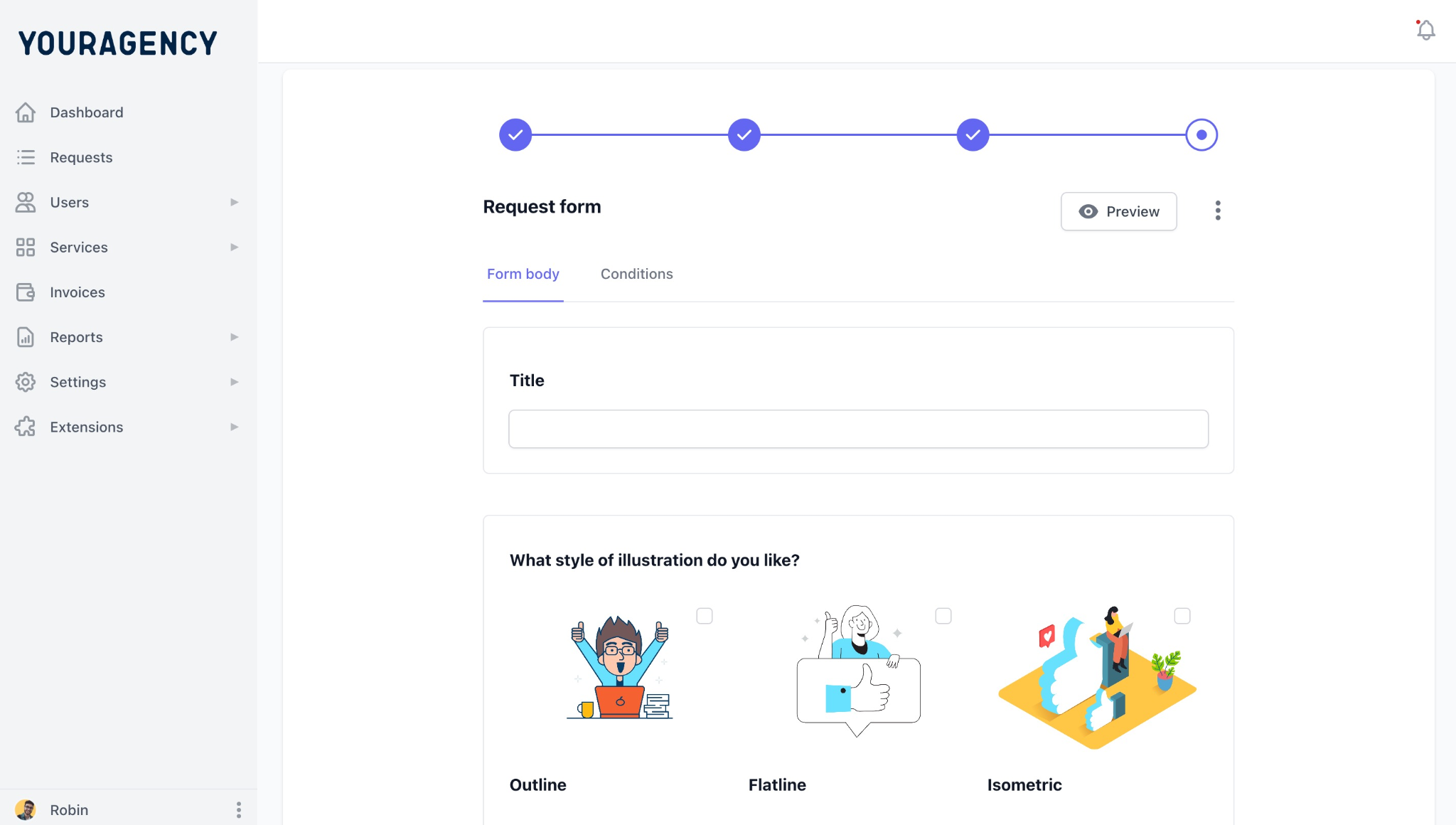
Once you've packaged your service based on what you heard in those initial conversations, reach out to the same people. They told you what they need and you’ve put up a service to solve it, they can be your first few clients.
To do that, offer an entry-level version of the service in exchange for honest feedback and a testimonial. Could be a discounted first month, a free audit, or a one-off task at a reduced rate.
You can reach out saying something like "Hi (Name), based on our conversation, I put together a (service name) package that fits what you described. We're bringing on a few early clients at (reduced rate) in exchange for honest feedback and a short testimonial if you're happy with the results. Would that be worth trying?"
If they say Yes, awesome! They’re your first case studies, and you can use their results to attract more clients. If they say No, sell to others.
Selling a productized service is different from selling a custom one. You need an infrastructure that closes the deals for you without sales calls, if you will. That infrastructure has four parts.
Your service page needs to answer every meaningful question a potential client can have.
Teamtown’s pricing page is a useful model here.

Each service has a name, price, what is included and what isn’t. It makes it easy for visitors to decide if they’re a fit or not.
To do this, do these (as those fitness creators say on Instagram😉):
You can use the service catalog in ManyRequests for this as well. Each service has detailed descriptions, prices per service, and a checkout flow that collects intake information at purchase. Visitors browse, choose a plan, and pay without involving you.
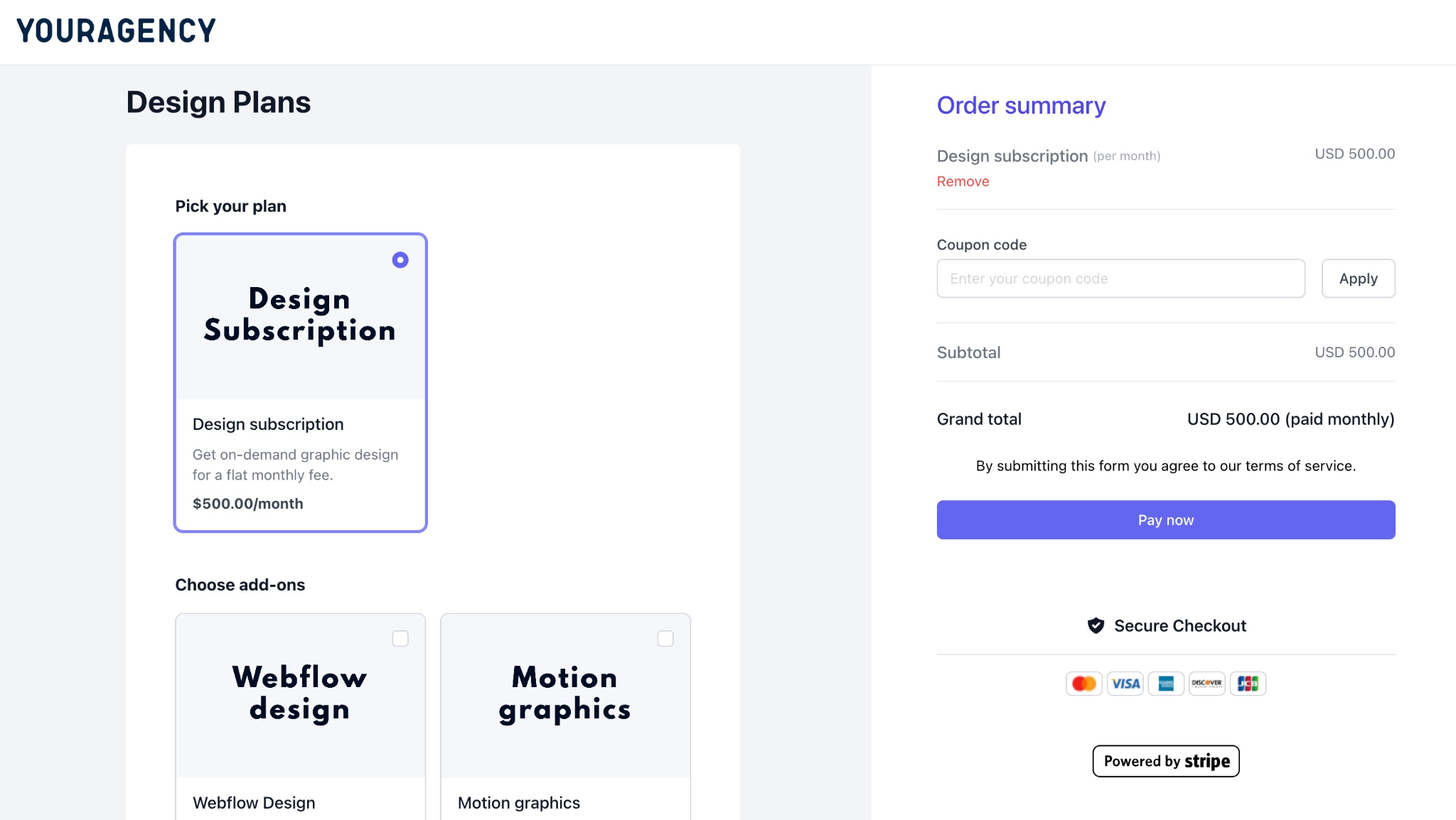
Before your team opens a request, the client should’ve already submitted everything they’d need. Files, context, specific requirements, style guides, and any preferences relevant to their plan. All these should come through an intake form at the point of purchase.
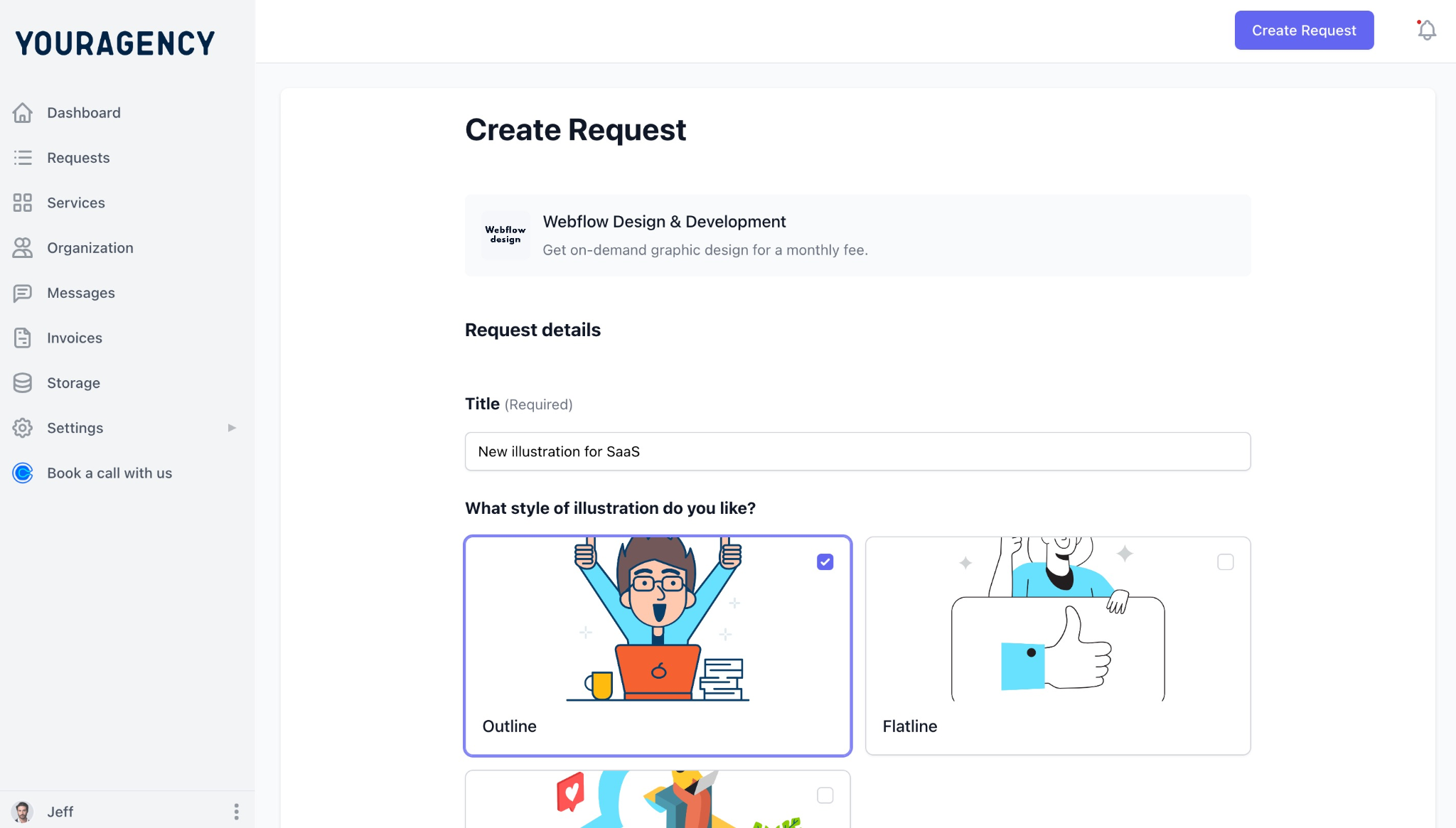
At Many Pixels, every client completes a structured brief before a request is assigned. The brief varies by service type, but the outcome was consistent. This way, the team has what they need and eliminates any back-and-forth.
ManyRequests handles this through customizable request forms with conditional logic. The form adapts based on the client's answers, so a client that needs motion design and video editing service won’t see the same questions as someone who chose web design.
Clients who also prefer to communicate via email can submit requests through a dedicated email, and ManyRequests converts those into trackable requests matched to their client record automatically.

Every productized agency asks the same question eventually. "Can you do something slightly different for me?"
Saying yes to everything breaks the scope. Saying no to everything loses clients who might be good fits with a small adjustment. This means you need a framework for what you say yes or no to.
If the request fits within the existing scope and the client's current plan covers it, do it without discussion.
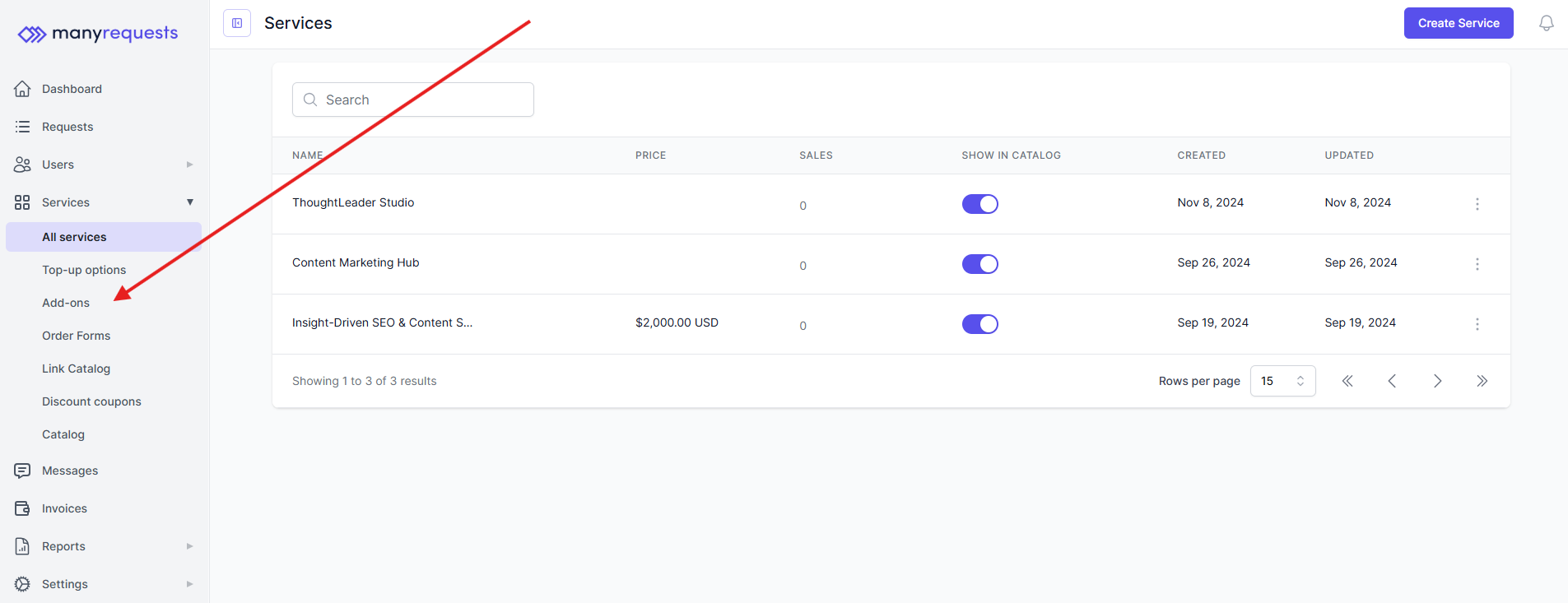
If the request is adjacent to your service but not in the current plan, price it as a one-off add-on. ManyRequests supports this through a service catalog that includes upsells and add-ons clients can purchase alongside their main subscription.
If the request sits entirely outside your model, decline it clearly. Don't try to accommodate a service type or client profile that doesn't fit your process, and you can say No, without being brutal.
For example, if WPBuffs’ client on a maintenance plan asks WPBuffs to redesign their homepage with a completely new layout, the redirect could read something like
"Homepage redesigns is outside our maintenance plans — we focus specifically on keeping your existing site fast and secure, which is what your current plan covers. For the redesign itself, we'd point you toward a Webflow or WordPress design specialist. In the meantime, I can run a performance audit on your current homepage and flag anything worth addressing before the redesign goes live — want me to do that?"
This helps them know you’re willing to help although you don’t offer the service.
A service page that converts is only valuable if the right people find it. To ensure they do, try:
Read more: 7 winning email scripts.
Read more: How to Get Retainer Clients
A repeatable delivery system is a set of documented processes that let someone other than you run the operation consistently. It covers four areas.


It’s good to have an internal wiki of these before you need them. This way, when you scale from five to 20 or more clients, you’re iterating on them, not winging it.
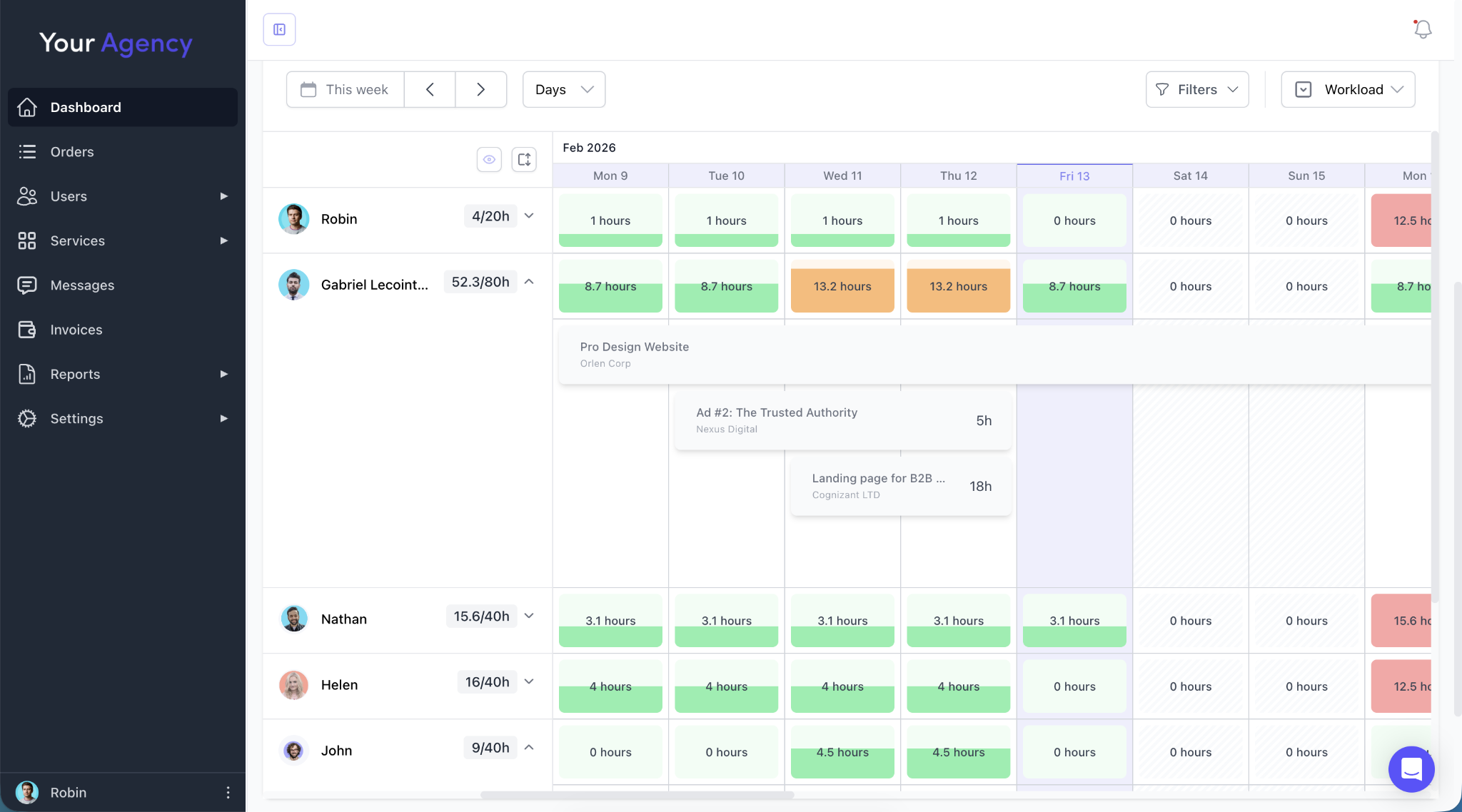
Hiring is the answer most founders reach for when the team is overwhelmed. The new person helps for a while. Then the team is overwhelmed again, and the cycle continues.
The problem is that hiring without documented processes means the new person depends on you for every answer.
The sequence that works is to document first, then hire. The role needs a clear process to follow and a way to measure whether it's being done well. If you can't write that down, you're not ready to hire for it.
A useful filter for when to hire versus what to automate: if the task requires judgment, hire. If it's repetitive and rule-based, automate it first.
Activities like status updates, assigning tasks, writing/sending invoices & reminders, and onboarding emails are all repetitive and rule-based. Setting these up takes a few hours (or minutes with ManyRequests), but hiring someone to do them manually takes months of onboarding and salaries.
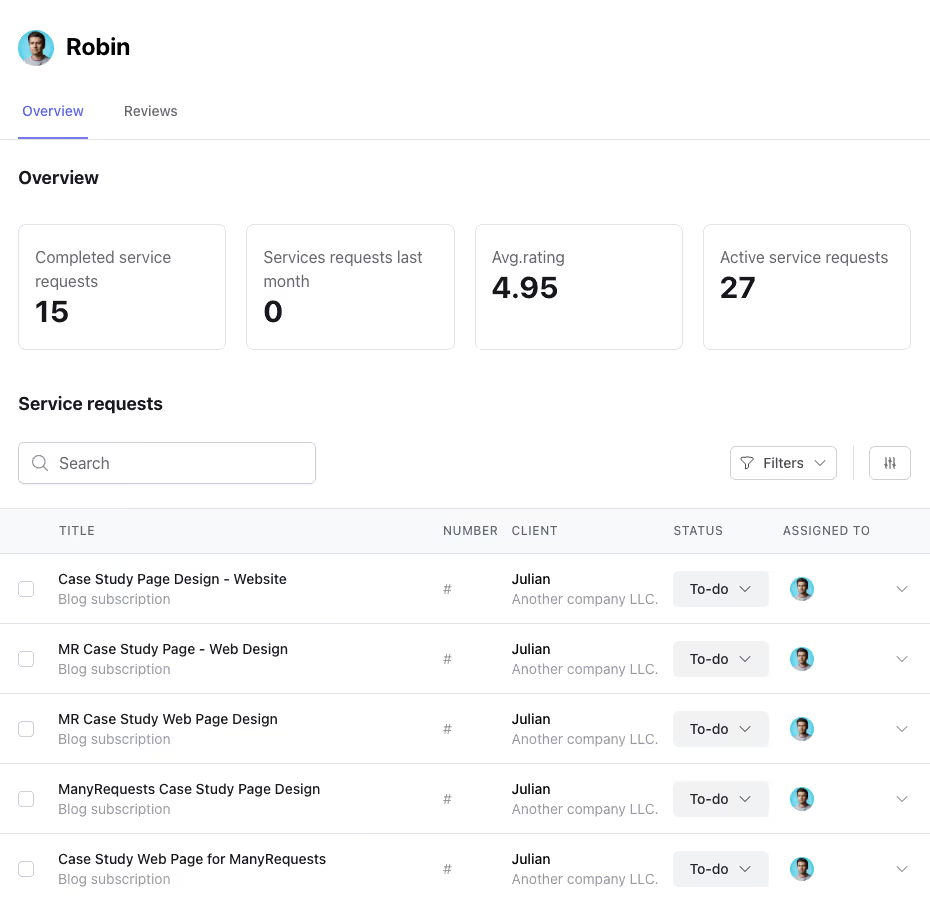
This way, you can manage your client’s projects, as seen in the demo below:
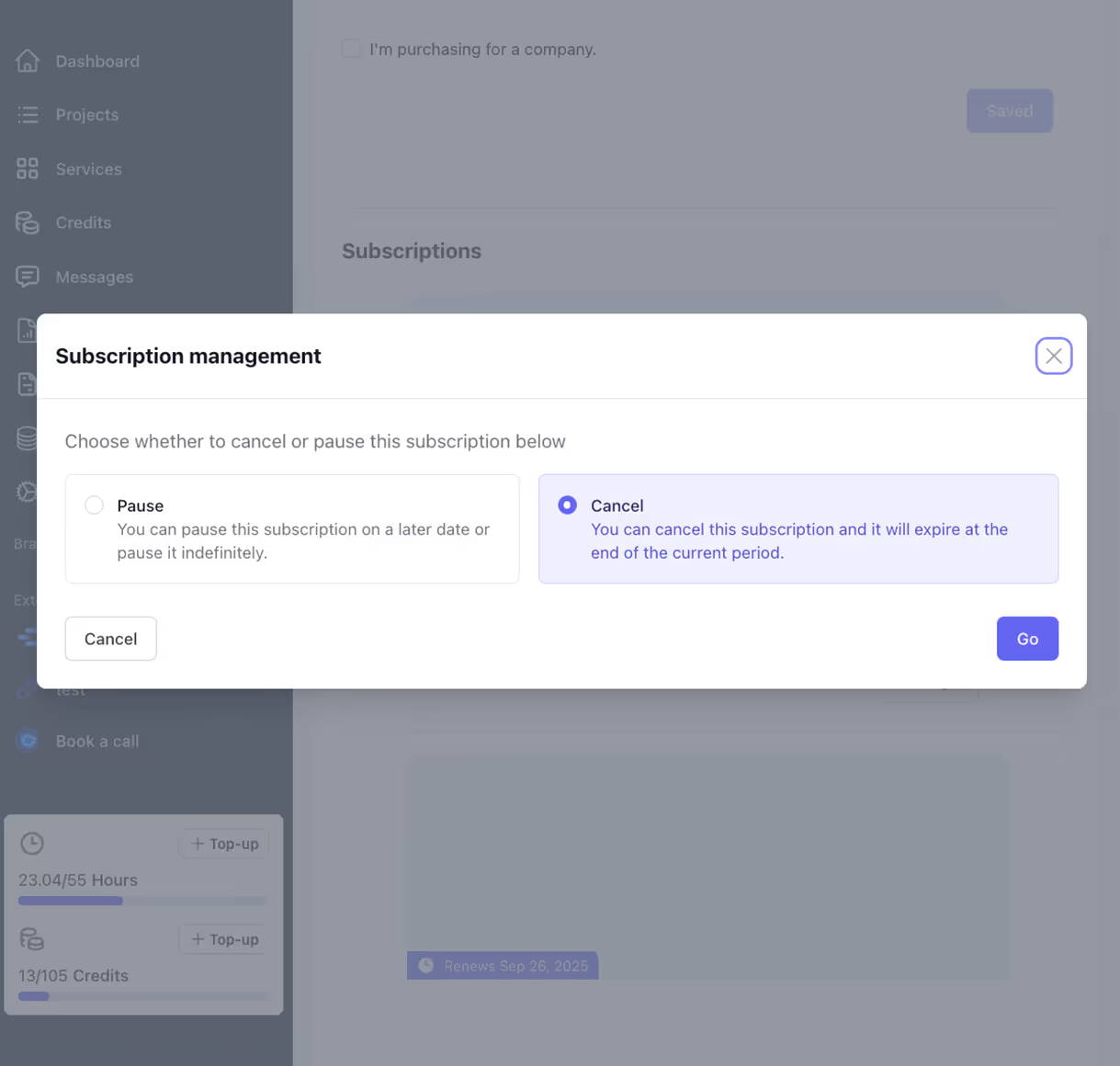
And also manage their subscriptions - whether to pause or to cancel (without the need to reach out to someone on your team, as seen in the demo below):
Having a productized service helps you package your skill into a sellable offering. You won’t have to write proposals every time you have a new client, and don’t even have to write invoices (if your system automates it for you).
With ManyRequests, you can. Use our client portal software to create a service catalog, intake forms, CRM, client portal, and also manage all your projects in one dashboard. It sounds like a lot to do, but we handle it well. Benjamin Williams, founder & CEO of 55 KNOTS says "We have been using ManyRequests for 3+ years, they are the backbone of our business." Want to know why? Use ManyRequests for 14 days; you should be convinced.
Start with a service you already deliver well and can describe in one sentence. Define the exact deliverables, set a clear timeline, and price it as a flat rate or monthly subscription. You can also look for services people pay for but you can package better and do it repeatedly without burning out. Build the intake form, workflow, and client handoff before you open it to clients.
Price based on the value the client gets, not the hours you’d spend. One-off projects typically range from $500 to $5,000 depending on scope and what your service is. Monthly retainers should run between $1,500 to $10,000, and unlimited-model subscriptions are typically between $3,000 and $15,000 per month. Start with a price that covers your labor costs plus a healthy margin and raise it when you have more demand.
If an agency charges $499 a month, that makes it a subscription business. What makes it a productized service is the fixed scope - if every client gets unlimited design requests, one active at a time, delivered within 24 to 48 hours. A subscription describes how you charge, but the productized service describes what you are selling and how the work is structured.
ManyRequests is built specifically for productized agencies. It handles the full operating stack: a client-facing service catalog for selling, a branded portal for delivery and communication, and billing automation for subscriptions, retainers, and one-off payments. Most productized agencies piece together five or six tools. ManyRequests replaces them with one system designed around the productized model.
Yes, within defined limits you set in advance. The best productized agencies build flexibility into the intake process. You can offer optional add-ons, tiered packages, or a scoping call for complex requests. The goal is to handle 90% of client requests through the same workflow and route exceptions to a clear decision path.
Consulting is customized advice where you sell your time to solve a client's specific, unique problems. A productized service turns that expertise into a standardized package with a fixed price and predefined scope, making it repeatable and easier to scale without your constant involvement.
1. See how ManyRequests works in real life. Start a free trial and experience how productized agencies centralize requests, reduce chaos, and streamline delivery, without changing their entire workflow.
2. Read our Implementation Guide to launch smoothly with your team and clients.
3. Follow us on LinkedIn and YouTube for practical agency growth strategies
4. Check out The Productize Blueprint to learn how to turn your services into a scalable, productized offer.
Peace Akinwale is a B2B SaaS content writer and strategist who creates BOFU content and how-to articles that drive measurable growth for software companies and agencies. Over six years, he's worked with clients like Marker.io, Pangea.ai, Spicy Margarita agency, and HigherVisibility to turn technical topics into content that converts, and has helped a client achieve 233% organic traffic growth within six months of taking over their blog.